All about backbends
Our spines are an incredible combination of strength and flexibility - of Sthira and Sukha. Strong bones and large muscles give us structure and protect sensitive nerves, while flexible ligaments and tendons allow the spine to move in all different planes.
With regular backbends we can help to protect this wonderful balance by increasing mobility while strengthening the supporting muscles around the skeleton.
Backbends can be broadly divided into three categories
1. Traction
Where the body is bending with gravity and the muscles on the front of the body are active, helping to control the range and rate of movement. These are poses such as Camel Pose (Ustrasana) or dropping back to Wheel (Urdhva Dhanurasana).
2. Leverage
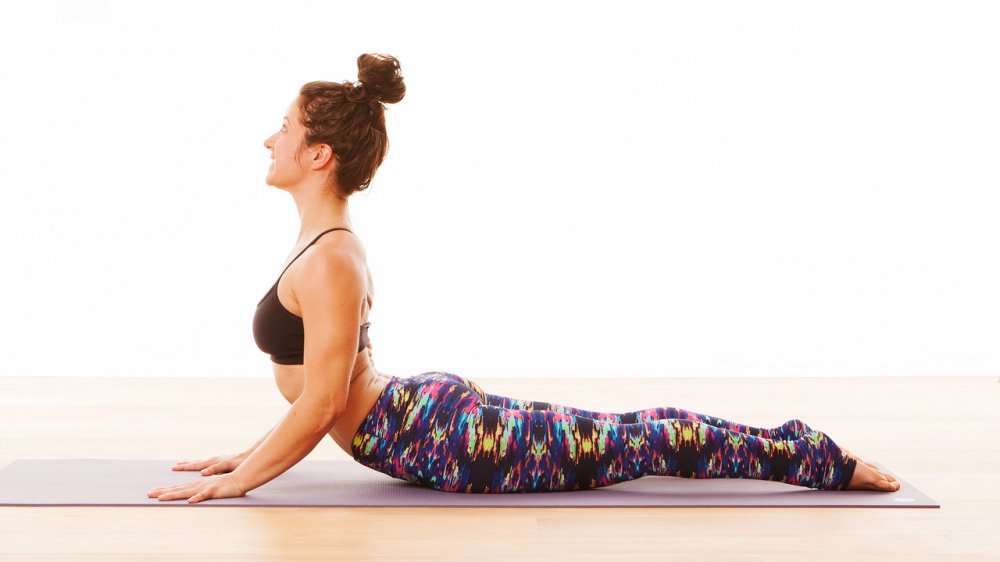
Where the strength of the arms or legs are used to deepen the backbend, Poses like Bow (Danurasana) or Cobra (Bhujangasana).
3. Contraction
Where the muscles on the back contract to overcome gravity. These are generally poses where you are lying on your front such as Locust (Salabhasana).
Some fundamental principles
Warm up first!
It's stating the obvious I know but due to our daily activities lots of us will be habitually rounding our shoulders and backs with things like computer work, driving, texting, cycling, playing with kids etc. In backbends we do the very opposite (one of the reasons why they are so great) so we need to start gently and give ourselves a helping hand.
When warming up, think about mobilising your spine in all different directions
When warming up think about mobilising your spine in all different directions for example with Cat Cow variations, gentle twists and side bends. Sun Salutations are great preparation as they warm the whole body - go easy on your first one so that when you go through Cobra or Upward Facing Dog you're not coming into the full expression of the pose straight away.
Which poses help backbends?
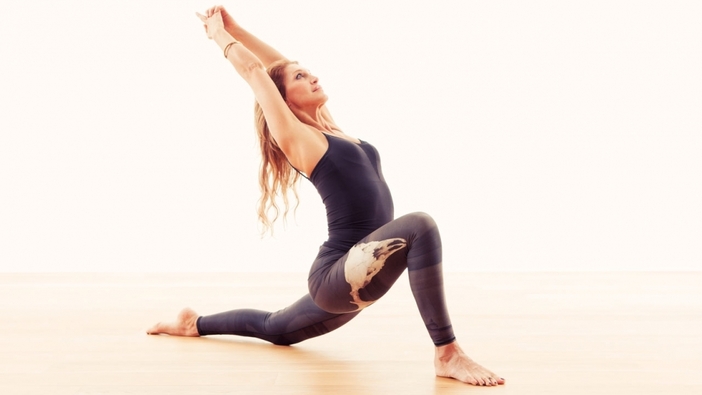
Backbends are also front body stretches - so they benefit from open and relaxed hips and surrounding muscles including the top of the the thighs (quadriceps), hip flexors and the psoas. Take a look at Sandra Carson's great article on the psoas. Lunge (Anjaneyasana) or Reclined Hero pose (Supta Virasana) can give a great stretch to the front of the thigh.
The front of the chest and shoulders also need to be warmed up and open for backbends. You can practise wide legged forward bend with the hands clasped behind you (Prasarita Padottanasana C) or some of the contraction style backbends such as Locust are good preparatory poses before going into stronger variations such as Wheel or Dancer’s pose. Core work can be helpful to do before backbends because by giving attention to those muscles on the front of the body we are more likely to use the core safely in backbends. Backbends then become a really nice counter-stretch to core work. If you have done a very strong core practice however, your muscles can feel contracted so doing something like an inversions (e.g. Dolphin pose) in between your core work and backbends can help to neutralise your front and back muscles while also warming up the back and shoulders further.
Alignment in backbends
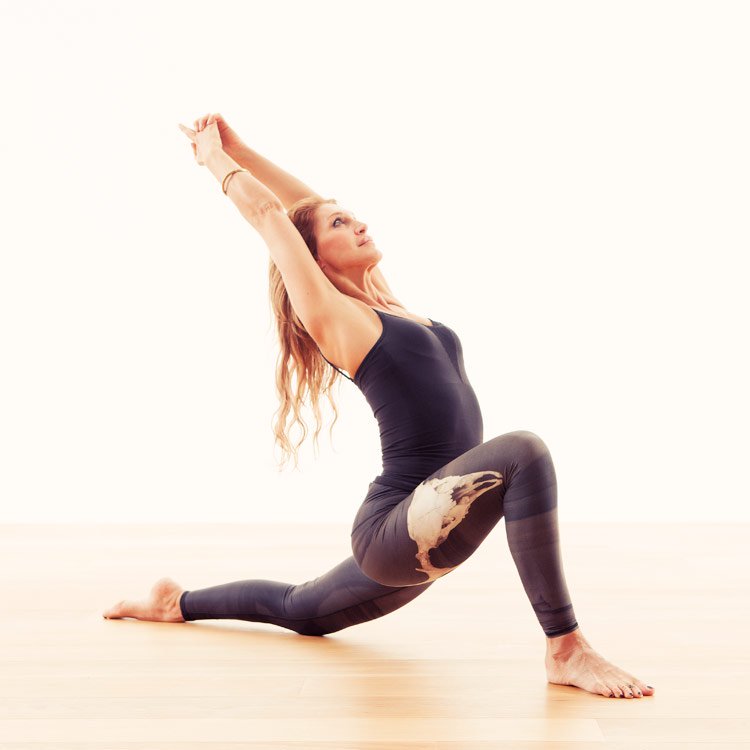
- Create a solid foundation - so press down firmly through your hands and/or feet depending on the pose.
- Make the legs strong, rotating the inner thighs inwards and back (see tips for Camel Pose below).
- Engage your core so that it supports your back by pulling the belly in and up, your tailbone points down rather than scooping under.
- Release your shoulders down your back and firm the bottom tips of the shoulder-blades in towards each other and (as if your shoulder-blades are hands gently pressing into your upper back).
- Keep the neck long and happy and aim for an even arch over the whole spine.
What to do with your glutes!
Should the buttock muscles be active or relaxed in backbends? It seems this is a hot topic in the yoga world! In poses like Bridge you can experiment with how the pose feels in different ways. In my experience if I use my glutes too much in Bridge I feel like I lose the inward rotation of the thighs - my knees have a tendency to start to come away from each other and I can feel my lower back tensing up. It’s impossible for the glutes to be completely relaxed because everything is so connected but if I let the other muscles do their work first it feels like a much more balanced pose.
A tip from Esther Ekhart for Bridge pose is to create the action of drawing the heels towards you (without moving the feet), this activates the hamstrings and lower glutes while keeping space in the lower back.
- To practice this glutes action in class follow Esther's Get Fit and Healthy Season 2 program
Watch out for...
...Compressing the back of the neck. For example in Cobra there can be a tendency to tilt the head back whereas the back bend should be coming from sending the chest forward and up. Try curling up to Cobra keeping the chin tucked, the gaze can be forwards instead of up to keep the base of the neck relaxed.
...Crunching lower back (e.g. in Camel) and letting knees fall out (e.g. in wheel or bridge). In both of these cases a block can be really helpful. In Camel Pose hold a block between your thighs and imagine you are pushing the block out behind you by rolling your inner thighs in (without letting the knees roll in). This is the inner spiral. Then, draw your lower belly in and up before you start to lift your torso up and then back into the pose. In Bridge Pose you can place the block lengthways and hold it between your knees as you lift your hips.
In all full backbends you are looking to experience the bend throughout your spine. Dhanurasana (Bow Pose) is a really good way to test this - most of us will have a tendency to want to either pull more with the legs or with the arms depending on where we are more flexible in our spine.
How to follow a strong backbend
In some practices strong backbends like Wheel are immediately followed by strong forward bends. There is logic in this to balance the energy and practice but for some people it can be more gentle for the spine to be neutralised with twists or extensions like Downward Facing Dog in between. In Yin yoga, backbends will often be followed by Savasana in order to allow you to experience the rebound effect of the pose.
Physical benefits of backbends
- Backbends are invigorating and strengthening.
- They stretch the quads and hip flexors and help open up the shoulders and chest, an area where lots of us hold tension.
- They build strength and power in the legs, arms and back muscles.
- By increasing mobility and awareness of the spine, backbends improve posture and can help to alleviate some kinds of back and neck pain.
Visit the yoga pose library and Yin yoga pose library to see the benefits of specific backbend poses.
Psychological / energetic benefits
Our body’s natural response to danger is to curl in, protecting our most vulnerable part - our heart, both the physical heart and the energetic heart space. Backbends do the very opposite action opening us up to the world. We are exposing ourselves and that takes courage - but also builds more of it! Overcoming our fears on the mat can give us courage off the mat too.
As backbends open the chest and upper body they stimulate the Heart chakra (Anahata) allowing us to open more fully in our lives too; to our emotions, experiences and in our relationships.
As backbends open the chest and upper body they stimulate the Heart chakra (Anahata) allowing us to open more fully in our lives too; to our emotions, experiences and in our relationships.
Strong backbends can sometimes release stored emotions: frustration, fear, anger, sadness as well as joy and love, so it’s not unusual to feel some of this again as it works through your body. I’ve felt irritated after a backbend class but I’ve also finished a practice with a real sense of love and compassion. Either way, for me I would rather have these emotions released!
So go safely and mindfully with your practice and enjoy the benefits of this release. Practise with softness stay with the breath.
Safety
What if you have a bad back or back injury? This is really going to depend on your injury - some poses can be helpful to free up tension but others should be avoided. Take a look at our individual pose guides for details and if you have any doubts speak to a physical therapist or experienced yoga teacher.
Take a look at some of our classes on EkhartYoga, guiding you through backbends from beginner to advanced.
- The art of back bending - with Andrew Wrenn, Level 1 to 2, 45 mins
- Opening up your front body - practising functionally - with José de Groot, All levels, 60+ mins
- Backbend inspired Vinyasa flow - with MacKenzie Miller, 45 mins, Level 2
- Use your core, improve your backbends! - with Adela Serrano, Level 2 to 3, 60 mins
EkhartYoga members can Browse all backbend classes.
Related
- The biomechanics of Forward Folds and how to make them more accessible
- All about yoga inversions
- Yoga hip openers

Jenny Savage was part of the behind the scenes EkhartYoga team. She first started yoga at the age of 15 and took her 200hr teacher training with Esther Ekhart in 2013. She has a background in Health Psychology, community mental health work, and health and wellbeing research.