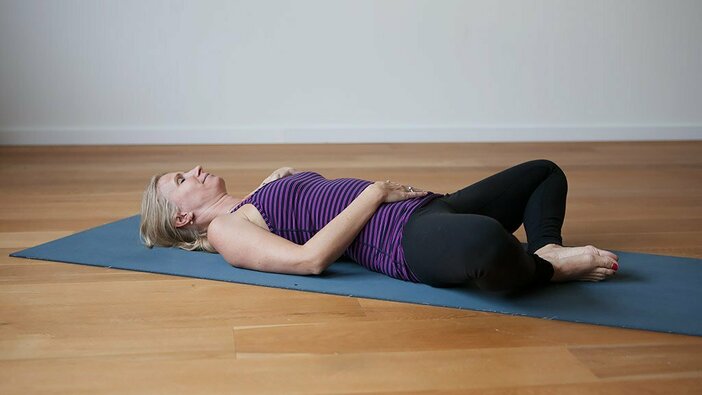
Yoga hip openers
Yoga is great for helping to relieve tension in this area. Working on hip flexibility and stability can also improve lower back pain, balance, posture and prevent injuries in later life.
While most yoga poses involve the muscles around the hips and pelvis in some way, hip openers are a specific group of asanas whose main anatomical function is to maintain and develop a healthy range of motion in the hips.
In this article we take a closer look at some basic hip anatomy and how we can use different yoga poses to target different areas of the hips for a healthy, balanced practice.
Some basic hip anatomy
Bones and range of movement
The bones of the hip are the head of the femur (the bulb at the top of the thigh bone) and pelvis. These make up the largest ball and socket type joint in the body, capable of a wide range of motion.
There are six ways the femur can move in relation to the pelvis:
- Flexion - moving the thigh towards the chest as in Child’s pose.
- Extension - the opposite action, bringing the leg behind the line of the torso - as in Cobra and Locust.
- Adduction - moving the thighs towards each other (or towards the mid-line) - like in Eagle pose.
- Abduction - moving the thighs away - like stepping out into Prasarita Padottanasana.
- Internal (medial) Rotation - as if the fronts of the inner thighs are moving towards each other - Hero’s pose when sitting between the heels.
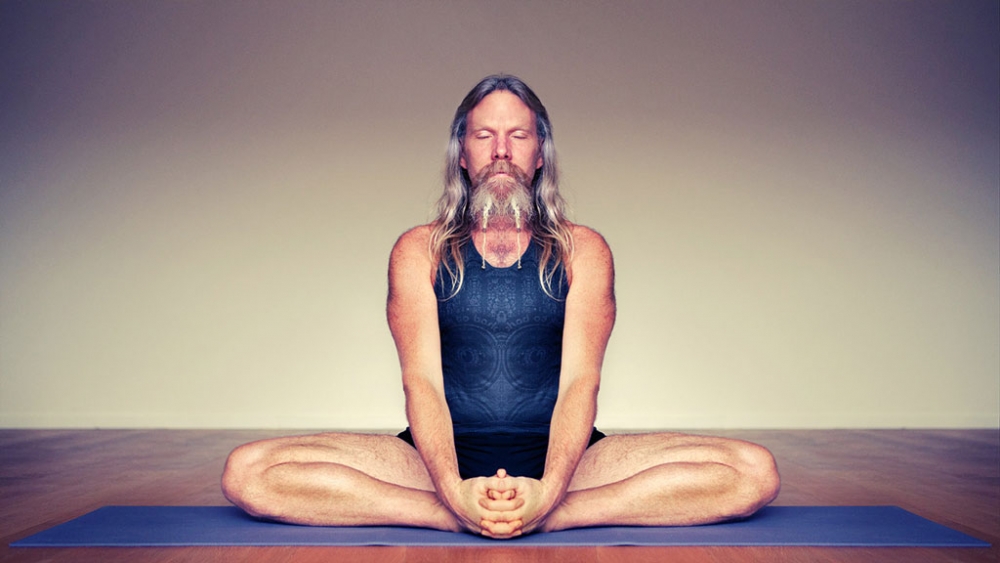
- External (lateral) Rotation - rolling the fronts of the thighs away from each other e.g. Baddha Konasana.
These can also be done in combinations of up to three actions at the same time (one from each group). For example, the actions in the front leg in Baddha Konasana (pictured below) are external rotation, flexion and abduction.
Muscles of the hips
Depending on how they are classified there can be between 17 and 25 muscles involved in these movements of the hip. These run from the lumbar spine (the psoas) right down to the knees (some of the quadriceps). So we can see that the term ‘hip muscles’ starts to get a little more complex and confused!
In terms of our yoga practice, to make it more simple, we can think of the hip as being divided into four major sections muscle groups. These four muscle groups also correspond to the pathways of myofascial meridians - this is a topic in itself we will cover soon.
Hip opening poses in yoga will have one (sometimes two) of these groups as their main target area.
These muscle groups are:
- Quadriceps and Hip Flexors group (4 of each) - at the front of the leg and hip
- Hamstring group (3 major and 1 minor muscle) - the back of the leg
- Groin, Internal rotators and Adductors group (7 muscles) - in the inside leg
- Gluteal group (3 gluteals, 3 external rotators and the IT Band which is a large tendon) - on the outer side and back of hip/ buttocks
For a detailed exploration of the specific muscles used in yoga I recommend Ray Long’s Bandha Yoga website and books.
How “open” are the hips?
There are two physical factors which can limit our range of motion that is to say, how open, our hips are:
Flexibility
One is the flexibility or tightness of the muscles, tendons and fascia in and around the joint - we looked at this a little in Yoga and Flexibility. This is what yoga poses can work on and help with as we cover later.
Skeletal Differences
The second and ultimate limit to range of motion in hip openers (and all poses) is the skeleton. Bone will not (should not) move past bone no matter how much we work on it!
People’s skeletons vary widely to each other in terms of the width and angles of pelvis and femur and how they meet together. Add to this the fact that we are also all asymmetrical, one side will generally feel ‘easier’ in a pose than the other. So what is a strong external rotation for one person is not so strong for the next person.
In terms of hip openers the key skeletal variations are:
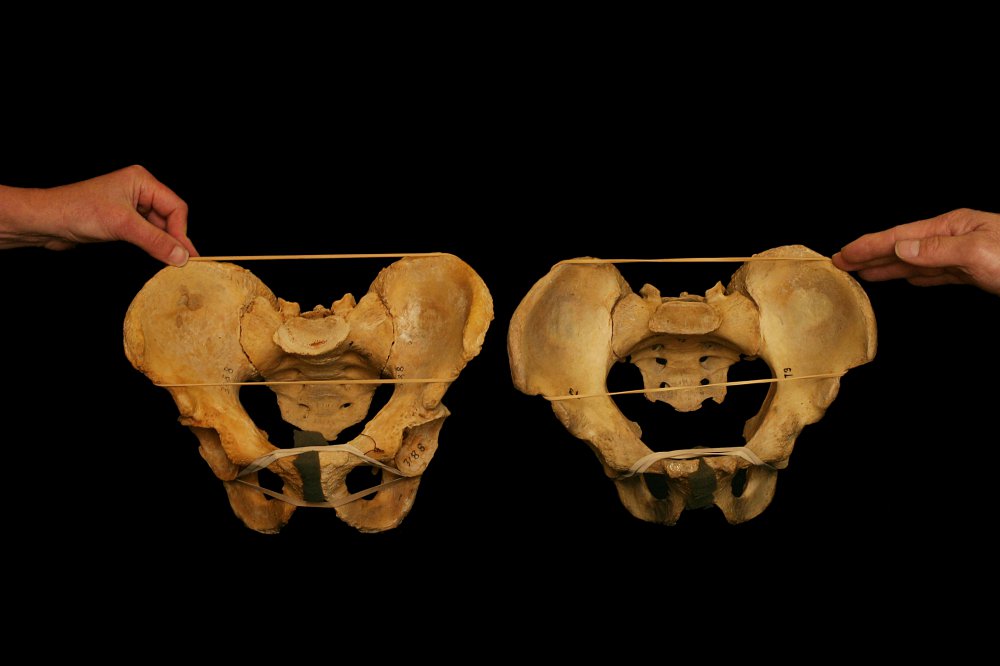
The orientation of the hip socket
If we looked at a skeleton’s pelvis straight on would the hip sockets be more to the front or to the sides? Deeper set or shallow?
Angle and length of the neck of the femur
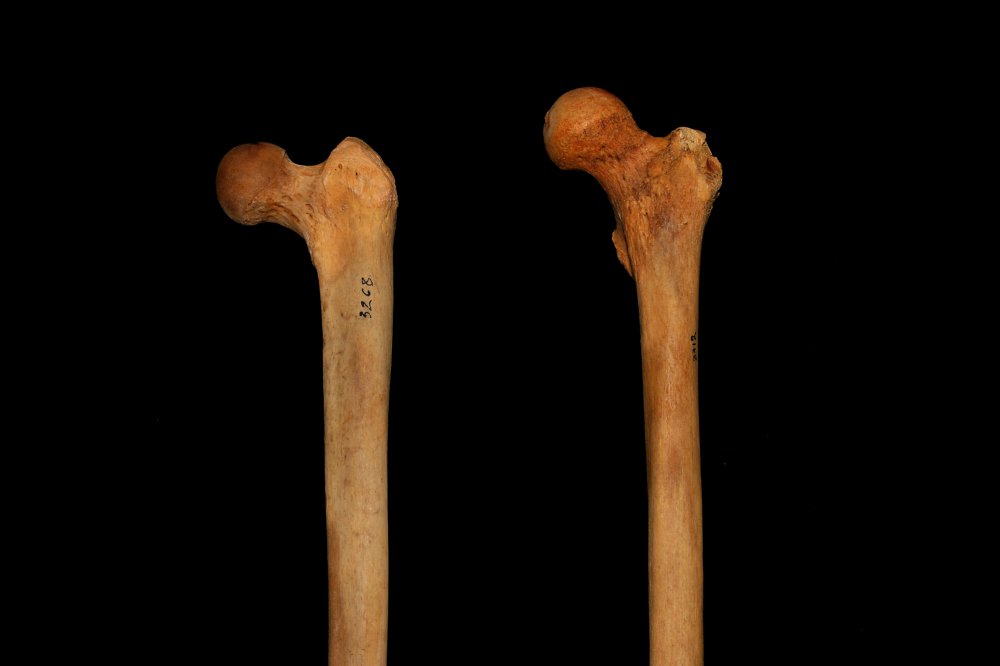
Torsion in the femur
The torsion (degree of twist) in the femur - as bones grow in spirals there is variation between people in the angle of the knee in relation to the head of the femur.
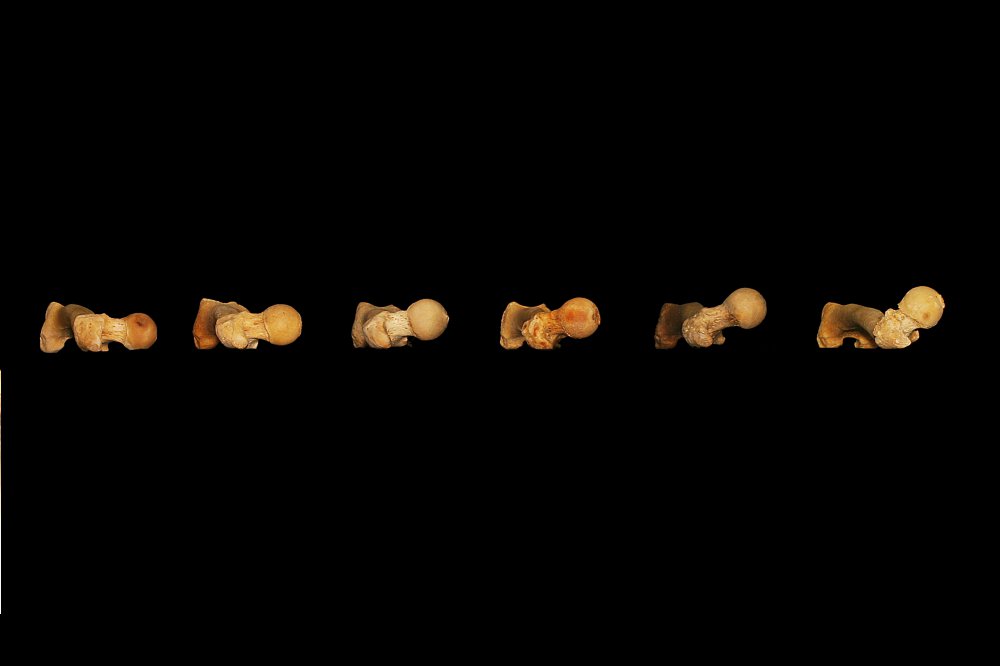
These skeletal differences affect the width of our hips and stance; whether we are more internally or externally rotated, and to what degree we can flex and extend our thighs. This is not to say we can’t all work on hip openers just that different variations and poses will be more effective and accessible for different people.
This is not to say we can’t all work on hip openers - just that different variations and poses will be more effective and accessible for different people.
Hip opening yoga poses
For a healthy, balanced practice we need to work on each of the four muscle groups, not just those we feel are our weak or stiff spots. While keeping in mind our individual differences we can find a pose or variation which will work effectively on the target group of muscles.
1. Quads and Hip Flexors
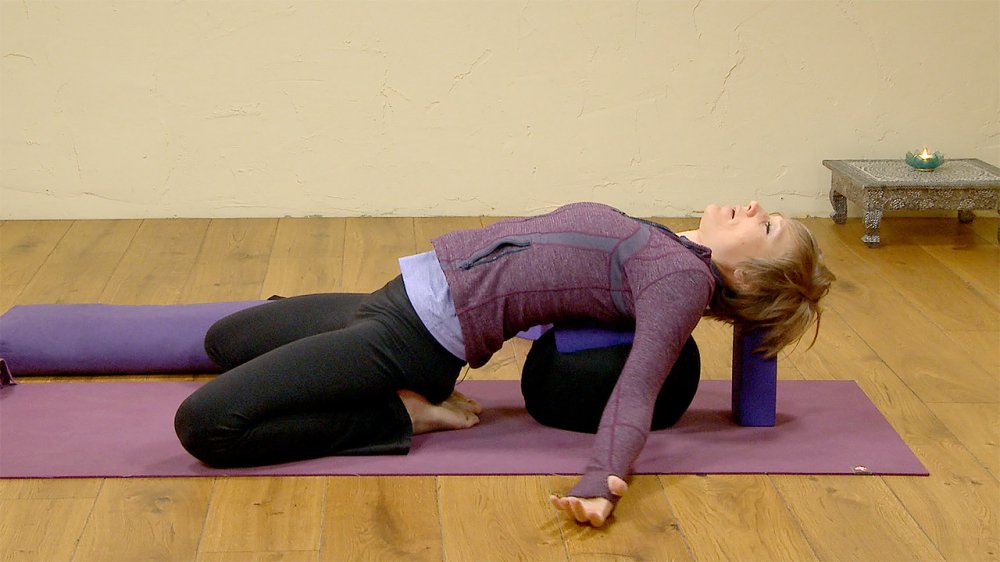
Poses for this muscle group include Lunges, Bridge, and Saddle Pose (pictured). Watch José de Groot's free yoga video for examples of different variations of Saddle Pose
In some poses which also target the lower back, like Saddle Pose, it can be good to try one-legged variations. So keeping your right leg in your version of Saddle Pose bring your left foot onto the floor with the left knee pointing straight up. This tilts the pelvis slightly and isolates the hip more.
You are aiming to feel the stretch in the belly of the muscles rather than at their attachment points (the knees in the case of Saddle pose).
2. Hamstrings
Poses for the hamstrings include Downward Facing Dog and forward bends like Janu Sirsasana - or Half Butterfly.
You can practise different variations of this pose in José’s Healthy lower back and flexible hamstrings class.
Tight hamstrings can often lead to rounding in the back so it’s helpful to use a block in seated poses or to let the knees bend.
3. Groin and adductors
Poses for the groin group include Happy Baby, Butterfly Pose and wide legged forward bends like Upavishta Konasana
Read Sandra Carson’s Opening the Inner Thighs article and practise with her for more information about this muscle group.
Particularly in wide-legged poses, watch for any sharp sensation at the attachment points of the muscles along the inside of the leg near the knee. Come out of the pose so that the stretch feels more balanced or try a different pose.
4. Glutes and IT band
Poses for this group include Square Pose (or Double Pigeon/ Agnistambhasana), Cow Face Pose / Gomukhasana, Easy Pose/ Sukhasana or Lotus Pose. These are all essentially working on the same area but with the legs at a different angle.
Practice this in a class
Again, with these poses watch for your knees. While the hip joint is capable of a large range of motion and rotation, the hinge joint of the knee is not. Don’t sacrifice your knees for the sake of a pose. Read Esther Ekhart's article on knee alignment for some extra tips.
A little word on hips and emotions
While the focus of this article has been on the more physical aspects of hip openers it’s hard not to give a brief mention of the emotional release people sometimes experience with these poses.
The hips are said to be where we store emotion - often the kind we keep hidden deep down like anger, anxiety, sadness and frustration. Working on the deep tissues in hip opening asanas can release both physical and emotional tension.
On a physiological level the muscles of the hips have a relationship with the fight or flight response - we are born with the reflex action of activating the hip flexors to bring us into the fetal position when under threat. One of the hip flexors, the psoas, is connected to the diaphragm so tightness here can lead to restrictions in the breath - see Sandra’s article on the Psoas.
On a psychological level how we approach hip openers (and other strong poses) can be a mirror for how we approach other challenges in our lives; hip openers require a softening and surrendering into the pose, staying present and staying with the breath. This can be tough but ultimately worth it!
Dive deeper with our EkhartYoga Academy course

Functional Anatomy with Anat Geiger
Learn what functional yoga is and how this approach can help free you from the stress of striving for an aesthetic ideal and instead, practice in an efficient, empowered and pain-free way that honours the uniqueness of your body.
This illuminating 2-hour course will familiarise you with the main anatomical structures of the pelvis, spine and shoulders and show you how the shape of your bones can determine the shape of your yoga poses.
Related


Jenny Savage was part of the behind the scenes EkhartYoga team. She first started yoga at the age of 15 and took her 200hr teacher training with Esther Ekhart in 2013. She has a background in Health Psychology, community mental health work, and health and wellbeing research.