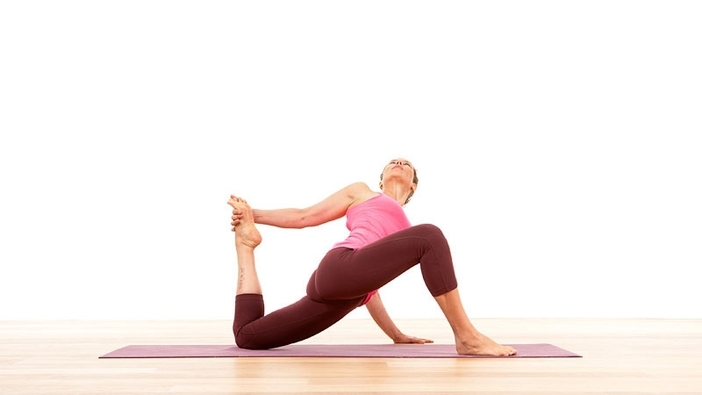
Stretching your stress out - Meet your psoas
The importance of this deep core muscle has long been overlooked. We take a look at the role the psoas plays in our physical, emotional and mental wellbeing and how stretching out your psoas can help release stress.
When do you use the psoas?
The psoas is a key player in the functioning of the hips. Also referred to as Iliopsoas, it merges with another deep hip muscle - the iliacus. The psoas connects your torso to your legs and helps you stay in an upright position. Whether you walk, cycle, do yoga, or just hang out on your couch, this muscle is involved in pretty much everything you do and don’t do.
This major hip flexor is engaged when you lift up your legs whilst walking, do yoga, cycle, and swim. It needs to stretch and lengthen every time you do Cobras and Wheels in yoga. Most people have a tight psoas and are not aware of it. Luckily, practising yoga can help to stretch this important muscle.
Benefits of a happy psoas
Having a 'happy' psoas means that you will quite literally feel more grounded and relaxed. Physically, you'll have a bigger range of movement. Having a tight psoas can manifest in back, hip and even ankle and knee pain. In addition to physical discomfort, a tight psoas is also fatiguing.
Tension, stress and the psoas
Mental stress can result in a painful neck and shoulders but other parts of the body store stress as well - including the hips. The psoas is the main muscle involved in the “fight or flight” response of the body. When you're startled, your psoas contracts. When you experience mental or emotional stress, the psoas will respond by tightening.
Physically, the hips are similar to Grand Central station. The hips are where many muscles and forces come together and are distributed through the rest of the body. The weight of the upper body is carried by the pelvis and it's the area that separates your upper from your lower body.
The hips have many deep and strong muscles that are needed for stability, movement and mobility. However, tension in the hips is not only caused by mental stress or physical fitness. Lifestyle, age, genetics, physical accidents and trauma also have an impact.
How can yoga help?
In your yoga practice, make sure you always do some hip openers, like Eka Pada Rajakapotasana (Pigeon) variations, deep lunges and some (basic) backbends. Most standing poses already have an element of hip opening and contribute to the stretching of your psoas.
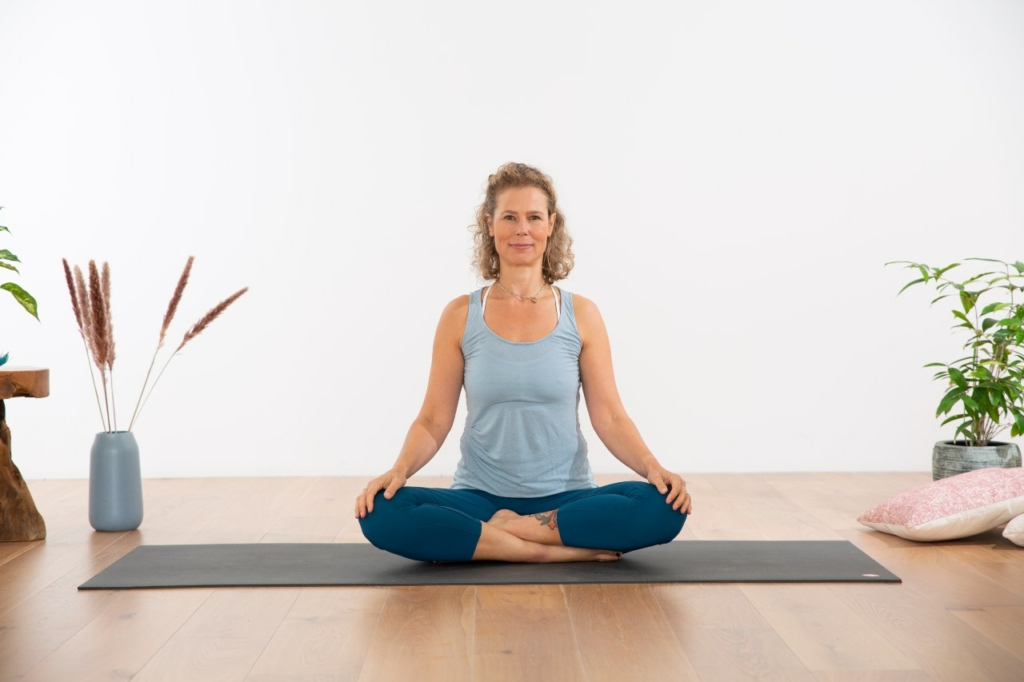
Train with Sandra on the YogaEasy Aacdemy!
If you’re interested in learning more about this fascinating topic, check out Sandra’s course, Releasing Stress and Trauma. This 5-hour online training will teach you practices to help you process trauma and stress in order to create balance, and enhance your resilience.
Stretch out your psoas
In this class, Sandra Carson will guide you through some simple poses and movements that will help you learn to listen to your body and set up the space to allow it to release tension.
Related
- For an in-depth exploration of the psoas muscles and the vital role it plays in our physical and emotional health, read The Importance of the Psoas Muscle

Sandra is a Certified Anusara® teacher, an E-RYT 500, YACEP (Yoga Alliance), a TRE® provider and Keto coach. She teaches workshops, trainings and retreats in The Netherlands and internationally.