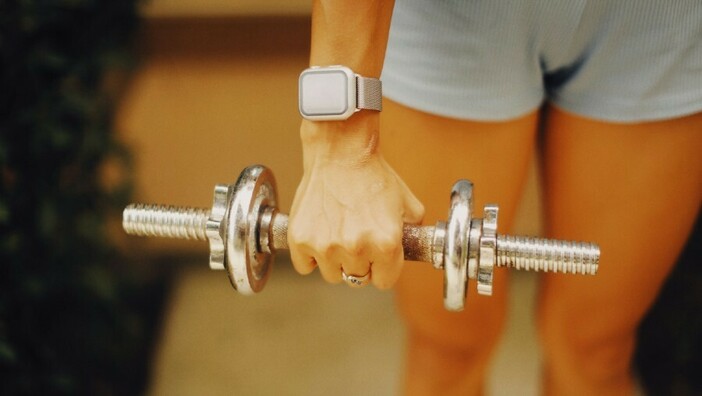
Surprising benefits of strength training for women
While the importance of strength for women is rightly given much more precedence now, for those of us growing in the seventies or eighties, the messages around strength – particularly anything involving weights – were quite different. Many of us, overtly or subtly, received the message that being "toned" should be our physical goal and that building muscle would make us look too “big” or “bulky’.
The truth, however, is quite different.
In this article, we’ll:
- define what strength training is
- highlight the benefits of strength training for women
- look at whether yoga alone can build strength
- offer guidance on how to get started
- suggest some strength training classes for you to try
Muscles do not have to be big in order to be strong and strength training is quite different from body building. Getting ‘big’ does not happen accidentally - gaining significant muscle mass requires a highly specialised training regime, and strength training is about so much more than appearance. It is an essential component of overall health and longevity, particularly for women. In a nutshell, incorporating strength training into our routine can be a game-changer.
Strength training is about so much more than appearance; it is an essential component of overall health and longevity, especially for women.
What’s the difference between strength training and resistance training?
Strength training falls under the catch-all term for resistance training. Both involve contracting our muscles against oppositional force (resistance) by using weights, resistance bands, using machines at the gym, or our own body weight - meaning HIIT, Pilates and yoga count as resistance training too. The key difference is that strength or weight training is specifically geared towards maximizing muscle strength and growth using heavier loads and lower repetitions.
What the experts say
Regardless of our fitness goals, experts agree that strength training is essential for bone health, muscle function, and longevity – which, including the impact of fitness influencers – possibly accounts for the whopping increase in google searches over the past 5 years.
Dr. Gabrielle Lyon, a leader in muscle health research, argues that our focus on weight loss has overshadowed the need for building and maintaining muscle. Skeletal muscle is an organ system that makes up 40% of our body weight, yet its health is usually completely overlooked. She explains it is not only vital for movement but also acts as a metabolic and hormonal powerhouse that influences everything from insulin resistance to cardiovascular health.
“Our focus on the pathology of fat in relation to diseases like obesity, Alzheimer's, cardiovascular disease, etc., has been misguided. The true root of these diseases lies in skeletal muscle and its health. Insulin resistance, for example, is a disease of skeletal muscle, not obesity. Skeletal muscle is an organ system that we have voluntary control over, making it the only system we can directly impact through conscious thought and action.”
Why is strength training important for women?
One of the consequences of our sedentary, comfortable, convenient lives is that – unless we are running around after young kids or have jobs that require us to exert ourselves physically – movement has now become an option rather than a necessity. The tradeoff is, therefore, that we need to make our lives – at least in a physical sense, a little LESS convenient. It means moving more, using greater and more varied ranges of motion, exerting our muscles, getting out of breath, even lifting heavy things now and then.
While that might not sound appealing to everyone, if we consider that doing this may not only increase the longevity of our life, but the quality of it, it may well be a ‘price’ worth paying. Of course, it can sometimes be hard to galvanise ourselves into action in response to a distant point in the future. But if we also consider the fact that after the age of around 30 our muscles start to decrease unless we do something about it, that distant point in the future may suddenly start to feel a bit closer!
Let’s take a closer look at five surprising benefits of of incorporating weight training into our routine...
Science-backed health benefits of strength training for women
1. It strengthens our bones
It probably goes without saying that strength training (with weights, resistance bands, or using machines) can help build and maintain muscle mass but did you know that it can also make your bones stronger?
During strength training, the muscles and tendons apply stress and tension to the bones, which, over time, stimulates them to produce more bone tissue and become stronger and more dense. This helps to reduce the risk of fracture due to osteoporosis - a condition that causes bones to become brittle and weak and one that women are particularly at risk of, especially post-menopause. And unlike weight bearing exercise, weight training targets bones of the hips, spine, and wrists, which are the sites most likely to fracture.
2. Helps counteract symptoms of perimenopause and menopause
The decline in estrogen after menopause can result in bone density loss for women and while we’ve discussed the positive benefits of strength training on bones, there are other benefits that it can offer women going through menopause. Until recently it was thought that for women between 40 and 60 years old, hormonal changes caused by the menopause caused a significant decline in skeletal muscle mass, which can have a serious impact on women’s strength and cause frailty or even disability in later life. However, a recent study showed that resistance training may, in fact, have a major, preventative effect on this decline.
As well as helping to counteract bone and muscle loss, strength training can also help prevent heart disease and the increase in visceral fat that can build up around our organs - both of which are linked to the decline in estrogen. And just as importantly, the feel-good hormones the strength or resistance training can produce can help boost our mood, alleviate anxiety and even improve our sleep.
3. Boosts brain power
The more obvious physical benefits of strength training are fairly well documented – it boosts resting metabolic rate, aids fat loss and supports weight management. But these benefits extend far beyond what we see in the mirror. Research has shown that resistance training also improves cognitive function, enhances memory, and reduces the risk of neurodegenerative diseases like Alzheimer's. But how?
What’s come to light in the past 5 years is the role of specialised hormones, called myokines, that are released when muscles contract. Once released these myokines travel to different organs and tissues in the body and jumpstart a variety of alchemical processes. Strength training can maximise the production of myokines that are released in the muscles but cross the blood brain barrier and encourage the brain to produce ‘brain drive neurotrophic factors’ described as “fertiliser for the brain”.
4. Can help women live longer
If none of the above has convinced you, perhaps the most compelling reason for picking up a couple of dumbbells on a regular basis is that, to paraphrase Dr. Gabrielle Lyon, the greater the health of your skeletal muscle, the greater your chances of survivability against any cause of disease.
A study published last year looked at whether the health benefits gained from physical exercise - which included moderate aerobic activity, such as brisk walking; vigorous exercise, such as taking a spinning class or skipping; and strength training, which could include body-weight exercises - differed according to gender. Most notably, it found that women who did strength training saw a 30% reduced risk of cardiovascular-related deaths, compared to 11% for men.
5. It's never too late to start!
As we’ve already highlighted, people naturally lose muscle function as they get older, and experts say faltering leg strength is a strong predictor of death in elderly people. If you’re in or approaching retirement age and you’re too old to reap the benefits of strength training, think again! Research published last year in the journal BMJ Open Sport and Exercise Medicine found that even if you start at retirement age, lifting heavy weights three times a week could “dramatically preserve your leg strength long into the later stages of life.”
How do I begin strength training?
Chances are, if you’re a member of YogaEasy, you already have! Yoga, Pilates and bodyweight exercises (planks, squats, lunges, pushups etc) are a form of resistance training which help us to build enough functional strength and mobility for our day to day activities and they’re a great place to kickstart the process of building muscle and getting stronger – particularly if you’re not generally that active. Plus, you don’t need any special equipment to get started.
In fact, the asana side of yoga (and Pilates) give us lots of opportunity to improve our skeletal health, including core strength to better support our spine, plus helping us to build strong legs, feet and hips (another source of support for the spine and upper body). All those one legged balances are also especially for helping us to develop and maintain balance, which as we’ve learned are important for preventing falls as we get older.
However, one of the limitations of body-weight exercises is that the load or stress (your weight) stays the same, while your strength increases. You can, of course, increase the intensity by increasing the time under tension, doing more repetitions, slowing down the movements or adjusting your relation to gravity (e.g. putting your feet on a chair while doing pushups). However, for an increase in muscle mass and metabolic benefits, it’s necessary to add in external load.
How much is enough?
According to the most up-to-date research recommendations from organisations like the World Health Organisation, the American College of Sports Medicine and the British Journal of Sports Medicine, women should aim for at least two sessions of strength training per week, targeting all major muscle groups - in addition to regular aerobic (cardio) exercise.
If you’ve got this far and are already wondering how on earth you’re supposed to fit yet another “essential” thing into your day, or feel intimated by the thought of lifting heavy barbells or entering a gym, please know that strength training can be as simple as using your own body weight, resistance bands, or light dumbbells at home. The goal isn't perfection or a body that can adorn the cover of Women’s Fitness magazine, it's about building resilience and confidence in your own body. So start where you are and use what you have – and if you’re a little bit curious, check out our class suggestions.


Kirsty is from the UK and moved to the Netherlands to work for EkhartYoga (now YogaEasy) in 2015. She's an E-RYT 500hr trained yoga teacher and has completed many courses in meditation, anatomy, mindfulness and Yoga Nidra. Kirsty previously worked in publishing, graphic design and recruitment. Her role as Content Lead at YogaEasy includes content writing, program creation, and teacher relations. She is currently studying for a Masters in Creative Writing for Therapeutic Purposes.


