Working on your balance

Von Jenny Savage

Starting from the ground up...

1. Create a steady, not stiff, foundation

There are twenty-six bones in the feet with a complex network of muscles and connective tissues supporting them. In standing balance poses the little stabilizing muscles in your feet (and ankles) are constantly making micro-movements and adjustments to keep you upright. However, for many of us, these muscles and tissues can be tight and stiff. Before you start your practice spend some time massaging your toes, feet and ankles to loosen up, especially if you get cold feet or you've been in shoes all day.

Use a tennis ball to massage the soles of your feet while you’re sitting or standing still at work. Place the ball on the floor under your foot and press down on the ball, spending some extra time in tighter places. Tennis balls do have a habit of rolling away across the room when you forget about them so put them in a sock first to prevent office-based calamities!

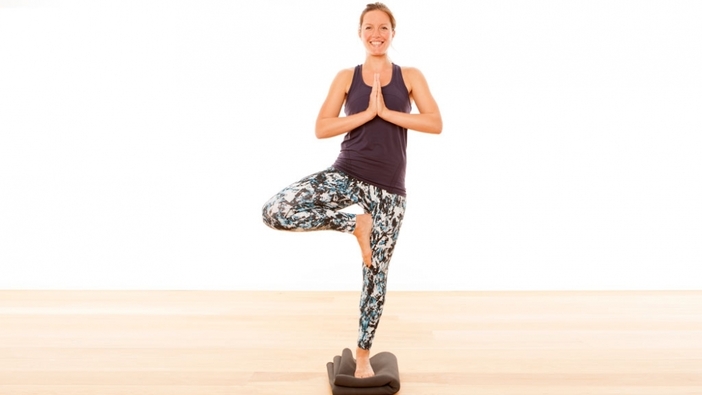
To give the stabilizing muscles some extra training practice, try balances like Tree Pose on a folded yoga mat or a stack of towels. Build this up gradually as you may be working previously under-used muscles.

Suggested classes

You'll see both José and David use the word 'intense' in their class descriptions - I can personally confirm that they are not kidding!

2. Activate your arches
safe feet in yoga

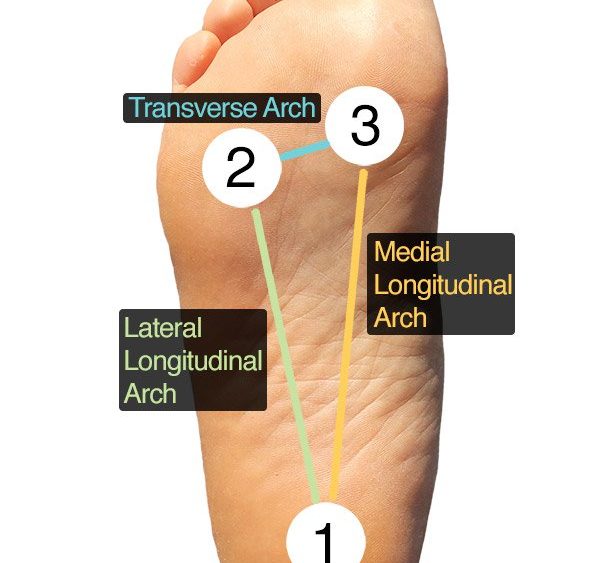
The arches of the foot are fundamental in supporting and distributing the weight of the body. When the feet are firmly rooted into the ground and you engage the arches of your feet you create an upward lift of energy - pada bandha.

Practice engaging and strengthening your arches by lifting and spreading the toes and then placing them down one by one starting from the little toe side. I was once told to think of the way a frog lifts and places their feet. Also, think of lengthening the feet from heel to toe. Strengthening and stretching your feet in this way creates what Tias Little describes as “an effective trampoline that springs the weight of the body upward

Read: Safe knees and feet in yoga practice for more about the arches of the foot. 

Suggested classes

3. Lower your centre of gravity

When we stand on both feet with hands by our sides our centre of gravity is somewhere just around or under our navel. As we change this by raising our arms the center of gravity becomes higher and we are less stable over our base of support (the feet in this case).

What can also often happen is that our attention is sent higher up too, especially for those of us prone to a lot of mental chatter in balance poses ...“don’t fall over don’t fall over you’re on film it’s really embarrassing don’t fall over oh no I fell over” and so on! :)

When this starts to happen bring your focus and attention to that point below your navel where your center of gravity normally is. Try to keep your attention in that spot. This principle of one-point focus is used in martial arts like Aikido.

Bringing your mental focus down to your centre of gravity is also helpful for anxiety.

Suggested classes

  • Watch Esther's Test your balance class where she explains how to use the breath to direct your energy - grounding and lifting at the same time. 
  • Ground from your centre with another helpful class taught by Esther - includes some Core work, Standing poses, Hip openers and a Backbend.

Standing Strong Balance Challenge

Join Laia Bové for a fun and challenging level 2 Vinyasa yoga program where you’ll work on a variety of balancing poses.


Jenny Savage
Jenny Savage

Jenny Savage was part of the behind the scenes EkhartYoga team. She first started yoga at the age of 15 and took her 200hr teacher training with Esther Ekhart in 2013. She has a background in Health Psychology, community mental health work, and health and wellbeing research.

Cathy26.09.2019
Love the mental image of a frog placing its toes down one at a time. Go, froggie!
Jenny01.10.2019
I find it so helpful and it makes me smile every time! I was told it when I was on a hike in Costa Rica. The guide could see me getting all fearful and tense walking down some slippy rocks. He told me to spread my feet like a frog and pretend I had suction pads 🐸 😁
Jenny01.10.2019
I find it so helpful and it makes me smile every time! I was told it when I was on a hike in Costa Rica. The guide could see me getting all fearful and tense walking down some slippy rocks. He told me to spread my feet like a frog and pretend I had suction pads 🐸 😁
Anne Berit15.09.2015
Interesting! Balancing/standing on different kinds of padding, challenging different muscles, makes perfect sense when you think about it. I have experienced in other classes and poses that minor adjustments can make for quite distinct changes and improvements.
Jenny27.07.2018
Thanks Anne! x
Jenny27.07.2018
Thanks Anne! x
Cathy14.09.2015
Hi Jenny, great, great article! I am always wondering where exactly to focus on my wobbly days and this helps a lot. I have done Adela's, Clayton's and Sandra's classes already, and they were all super helpful......so I'll try the other two you have suggested. I think perhaps for me the two issues when it comes to maintaining balance relate (just as you point out here) to keeping my arches lifted (which I tend to forget as soon as I rise into the pose:-() and to maintain a one-point focus! Many thanks, Namaste CX
Cathy14.09.2015
Hi Jenny, great, great article! I am always wondering where exactly to focus on my wobbly days and this helps a lot. I have done Adela's, Clayton's and Sandra's classes already, and they were all super helpful......so I'll try the other two you have suggested. I think perhaps for me the two issues when it comes to maintaining balance relate (just as you point out here) to keeping my arches lifted (which I tend to forget as soon as I rise into the pose:-() and to maintain a one-point focus! Many thanks, Namaste CX
Jenny27.07.2018
Thank you so much Cathy. I'm glad you found it helpful. I made this collection of classes which have also helped me with balance as they work on the feet and arches too - https://www.ekhartyoga.com/collections/waking-up-the-feet . One-point focus is a biggie for me too ;)
Jenny27.07.2018
Thank you so much Cathy. I'm glad you found it helpful. I made this collection of classes which have also helped me with balance as they work on the feet and arches too - https://www.ekhartyoga.com/collections/waking-up-the-feet . One-point focus is a biggie for me too ;)
Christine W12.09.2015
Thanks Jenny!!!!
Jenny27.07.2018
Thank you Christine!
Jenny27.07.2018
Thank you Christine!
Gail10.09.2015
Wonderful information! LOVE, LOVE, LOVE this website and all the great teachers. Truly feel blessed to be a subscriber. I noticed that when I practice balancing poses on a very flat surface, such as my home's wood floors, I'm able to balance very well. However, at the studio, where there is carpet under my mat, I wobble easily. I would have liked more information on using a blanket/towel under the foot for poses such as tree pose.
Jenny27.07.2018
Thank you Gail! I'll add more details in about using the folded blankets or mat - thanks for reading :)
Jenny27.07.2018
Thank you Gail! I'll add more details in about using the folded blankets or mat - thanks for reading :)
Sara08.09.2015
I really like the tip about focusing on the point below your navel. I will try that next time!
Sharon14.09.2015
Such interesting reading. I have recently been focussing on spreading and lengthening my feet, as I notice that as I approach 60 they are stiffening up. I do appreciate the generous breadth and depth of information on this website. Thank you.
Jenny27.07.2018
Thank you Sharon!
Jenny27.07.2018
Thank you Sharon!
Karen06.12.2016
All of this information is so helpful as my fifty-year-old feet have decided to be stiff and sore most of the time. I will follow these suggestions!
Jenny27.07.2018
Thank you Karen! Have a look at some of these classes for the feet too. x https://www.ekhartyoga.com/collections/waking-up-the-feet
Jenny27.07.2018
Thank you Karen! Have a look at some of these classes for the feet too. x https://www.ekhartyoga.com/collections/waking-up-the-feet
Karen30.09.2015
Excellent resources here!
Mary21.07.2017
Thank you Jenny for this great article, so helpful.
janet27.07.2018
hi there Jenny. thank you for your consideration. i cannot bend my left big toe whatsoever as you demonstrate in photos in some of your other classes. i just want to be clear. i cannot do that bending in the photos whatsoever! so having taken yoga before how does one continue yoga when there are so many poses that i cannot do because of that toe limitations. won't my body get out of whack???stretching other areas. won't i be out of balance. is there another way to look at that within yoga?
Jenny05.08.2018
Hi Janet, I will put in a request for a class on this topic as it will be helpful for many of us (and clearer than me describing here). In the meantime I'll try to give examples I've found helpful. Sorry, as I don't know your yoga experience I hope this is useful and not too obvious! I think it's a case of modifying poses requiring a bend in the toes and practising the same modifications on each side. High lunges are a big issue for the toes as I'm sure you're well aware. But you could swap these for a low lunge with the knee down so that the top of the foot is flat on the floor with toes pointing backwards, no bend in the toes. Or practise Warrior 1 instead of High-lunge so the back foot points to the side and is flat on the floor. If Downward Dog is an issue for your toes because your heels don't come down all the way to the floor (which is perfectly normal) then you can get many of the same benefits by doing half Downdog with your hands on a wall or the back of a chair (or again, knees down in 'puppy dog pose'). For Plank and Chaturanga you can also practise these with the knees down so that the feet can be flat - toes pointed back again. I found certain styles of classes easier to adjust than others. For example, I switched from practising solely Vinyasa flow or Ashtanga to more Hatha and Yin classes as you hold the poses for longer, without the flowing transitions so there's more time to modify or substitute poses. Look for Floor Hatha classes as well so there's little weight through the feet (under the specific use filter). Esther Ekhart talks about the poses being there to serve our bodies and not the other way around. I find this helpful to remember. Most people will have at least some poses they have to skip or alter in some way. All the best for making the changes.
Jenny05.08.2018
Hi Janet, I will put in a request for a class on this topic as it will be helpful for many of us (and clearer than me describing here). In the meantime I'll try to give examples I've found helpful. Sorry, as I don't know your yoga experience I hope this is useful and not too obvious! I think it's a case of modifying poses requiring a bend in the toes and practising the same modifications on each side. High lunges are a big issue for the toes as I'm sure you're well aware. But you could swap these for a low lunge with the knee down so that the top of the foot is flat on the floor with toes pointing backwards, no bend in the toes. Or practise Warrior 1 instead of High-lunge so the back foot points to the side and is flat on the floor. If Downward Dog is an issue for your toes because your heels don't come down all the way to the floor (which is perfectly normal) then you can get many of the same benefits by doing half Downdog with your hands on a wall or the back of a chair (or again, knees down in 'puppy dog pose'). For Plank and Chaturanga you can also practise these with the knees down so that the feet can be flat - toes pointed back again. I found certain styles of classes easier to adjust than others. For example, I switched from practising solely Vinyasa flow or Ashtanga to more Hatha and Yin classes as you hold the poses for longer, without the flowing transitions so there's more time to modify or substitute poses. Look for Floor Hatha classes as well so there's little weight through the feet (under the specific use filter). Esther Ekhart talks about the poses being there to serve our bodies and not the other way around. I find this helpful to remember. Most people will have at least some poses they have to skip or alter in some way. All the best for making the changes.
janet23.07.2018
i have hallux rigid-us which means i cannot bend my left big toe. i have maybe 10 degree range of motion. the joint has not completely fused yet. but i really have very limited motion. how can these exercises be altered if i don't have the range of motion? i can't exercise, stretch, etc my calves etc and my other side is compensating way too much now.
Jenny27.07.2018
Hi Janet, I have something similar myself with restricted range of motion in both big toes due to arthritis. While I don't want to give medical advice, I can say that the tennis ball massage trick has helped to stop my feet from stiffening up completely and I feel has had a positive knock-on effect through my whole posture. Try this class with Sandra - https://www.ekhartyoga.com/classes/foot-life-saver I also find trying balancing postures on an unstable surface (like in the photo) helps to wake up the smaller muscles in the feet. Another tip I was given was to sit in a chair, lift your right foot and, keeping the lower leg still, write the alphabet out with your foot in mid-air. So it's just your foot and ankle that move. This keeps the ankle mobile and works on your calves too. Apart from that I just try to keep the joints as mobile as I can without overdoing it. I hope this helps a little, I know it's frustrating! All the best x
Jenny27.07.2018
Hi Janet, I have something similar myself with restricted range of motion in both big toes due to arthritis. While I don't want to give medical advice, I can say that the tennis ball massage trick has helped to stop my feet from stiffening up completely and I feel has had a positive knock-on effect through my whole posture. Try this class with Sandra - https://www.ekhartyoga.com/classes/foot-life-saver I also find trying balancing postures on an unstable surface (like in the photo) helps to wake up the smaller muscles in the feet. Another tip I was given was to sit in a chair, lift your right foot and, keeping the lower leg still, write the alphabet out with your foot in mid-air. So it's just your foot and ankle that move. This keeps the ankle mobile and works on your calves too. Apart from that I just try to keep the joints as mobile as I can without overdoing it. I hope this helps a little, I know it's frustrating! All the best x
Sophie23.07.2018
Very grateful! I will remember to massage my feet first and to lower my gravity center.
Jenny27.07.2018
Thank you Sophie!
Jenny27.07.2018
Thank you Sophie!
Caroline26.07.2018
This is a great article. I’ll definitely be trying some of these tips, classes and exercises. I would highly recommend Andrew Wrenn’s ‘The Art of Balance’: This Ekhart Yoga class was an absolute game-changer for me and when I get the wobbles, I go back to it for a refresher. ❤️??
Jenny27.07.2018
Thank you Caroline. I love getting recommendations! I've added Andrew's class to my watch later list. x
Jenny27.07.2018
Thank you Caroline. I love getting recommendations! I've added Andrew's class to my watch later list. x