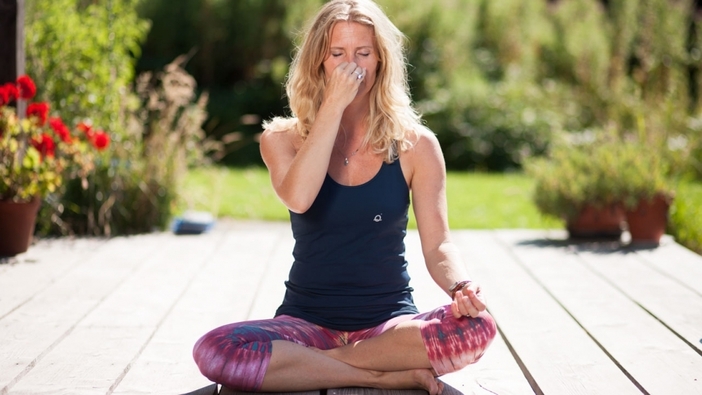
What is Pranayama?
The way that we move, think, act and especially breathe contributes to the flow and vitality of prana - the universal energy that runs through us and everything around us.
Why is the breath so important?
It’s the first thing and last thing we do in our lives. The one constant thing we all have. Without breath there is no life!
Daily stressors, tensions and physical habits can create physical and energetic obstacles in our bodies. Without even noticing it our breathing can become gradually more shallow or stilted. We can develop unconscious breathing patterns restricting the flow of breath and prana.
When we work on freeing the breath through pranayama (breathing exercises) we are also working on letting the life energy flow through the body. It has the effect of energizing, relaxing and healing the body, letting everything fall into place. It literally increases and balances the life energy in your system.
The benefits of Pranayama
Again through a regular and sustained practise of pranayama, you can supercharge your whole body!
On a physical level by using pranayama techniques we can utilise and strengthen the whole range of our respiratory organs. We explore the lower, middle and upper parts of the breath and regulate the inhalation, retention and exhalation of the breath.
A regular pranayama practice can stimulate the parasympathetic system, countering the overstimulation our bodies go through during the Fight or Flight response.
Our breathing patterns are also very closely linked to our emotional states. We will breathe in a different way when we are angry, when we are excited, tired or when we are nervous. However, it works the other way too. We can calm or energize ourselves by changing our breathing patterns. Even just taking time out to consciously become more aware of our breath can help us to start to alter our emotional states.
- Read more about The Benefits of Pranayama
The techniques
Pranayama techniques have different effects, much like different asanas/yoga poses do. Most kinds of pranayama are practiced sitting down with an upright spine for example in Cross-legged Pose, Hero’s Pose (on props if needed) or Lotus Pose. The idea is for the breath to be smooth and even and not strained even after breath retention.
Some such as Kapalabhati Pranayama (Skull Shining Breath) are energizing and detoxing with a fast rhythm and strong abdominal contractions to expel the breath.
Others are balancing or relaxing like Nadi Shodhana(Alternate Nostril Breathing) or Sama Vritti (Equal Breathing) where inhalations and exhalations are equal length.
- Practise these and other kinds of pranayama in Ten Days of Pranayama
It is best to practise pranayama in the morning on an empty stomach and in a room with fresh air. Certain kinds of pranayama are not recommended if you have your period, are pregnant or have digestive problems because they involve abdominal contractions with an upward motion.
Pranayama with fast rhythms or breath retention should not be practiced if you have asthma, heart disease, hypertension or are pregnant. This is not a complete list of precautions, if you have a specific health condition please speak with your health professional or local yoga therapist before practicing.
For an introduction, you can start with my Breathing Awareness Exercise to get you experiencing the breath in the body.
To experience the real benefits of pranayama you need to develop a regular practice, but just with 20-30 minutes a day you will feel more alive, alert and balanced!
updated March 2020

Esther Ekhart, face and founder of EkhartYoga, brings years of personal yoga and meditation practice, therapy training and study of yoga philosophy into her teaching.