The Psoas, Iliacus, Quadratus Lumborum and Piriformis - connecting the back and hips

Von Jennilee Toner

Tight hip flexors and painful backs

When we talk about tight hip flexors, tight or weak or painful lower back muscles, and weak lower back-hip integration (Sacrum-Iliac joint pain and instability) it's helpful to consider the relationship between the four deep muscles that connect the spine to the pelvis and femur: the piriformis, Quadratus Lumborum, psoas and iliacus.

The relationship between these four muscles fascinates me: Do these four muscles get along? Do they support each other, like a family, when one becomes tight, shortened and weak? Or is there a bully mentality, each one wanting to be stronger and more favoured, sabotaging the others to be the triumphant winner?

The psoas and iliacus

Muscles that are tight (locked SHORT) from repetitive forward flexion: the psoas and iliacus.

Psoas
(
major hip flexor)

  • Originates: Thoracic Spine 12 and Lumbar Spine 1-5
  • Inserts: Lesser Trochanter of Femur (medial superior femur)

Iliacus
(major hip flexor)

  • Originates: Iliac Fossa (internal rim and surface of ilium)
  • Inserts: Lesser Trochanter of Femur (medial superior femur) 

Muscles that are tight (locked LONG) from repetitive forward flexion: the QLs

Quadratus Lumborum 
(deep spine extensor to neutral when both are working)

  • Originates: Posterior Internal Iliac Crest
  • Inserts: Lumbar Spine 1-4 and Lowest Rib
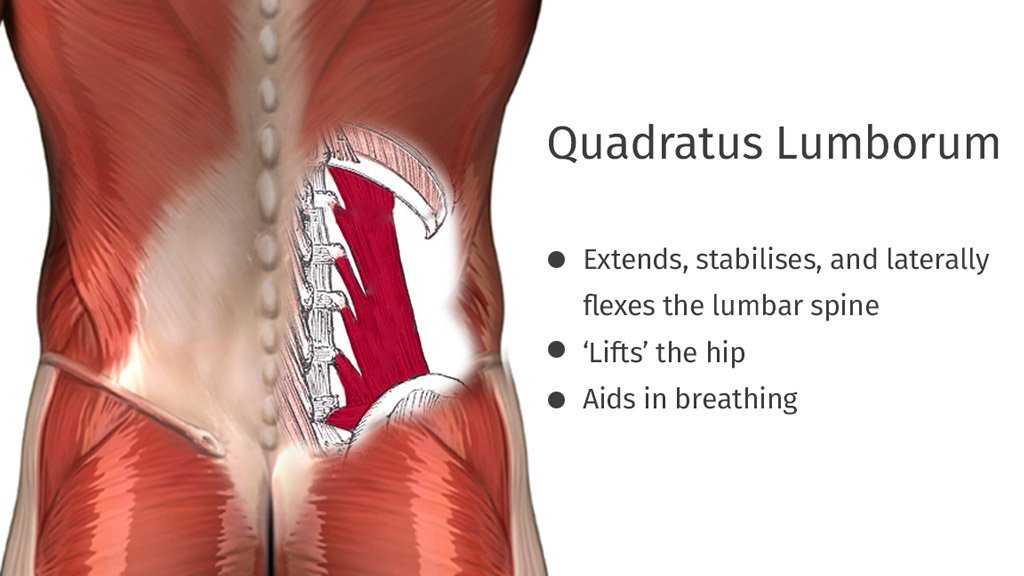
Quadratus Lumborum
Quadratus Lumborum

Like a relationship between two people that may need a bit of counselling to regain balance, the simplest dilemma in this region of the body is that the iliacus and psoas (known together due to their combined insertion on the femur as iliopsoas) are tight and weak from overflexing and the quadratus lumborum are tight and weak from trying so hard to bring the body back upright to neutral.

The answer here is as equally simple: stretch and strengthen these pairs (agonists and antagonists) with backbends and quadricep stretches.

Unfortunately for most of us the dilemma is much more complicated than this.

How it gets complicated

The fourth muscle in the equation: The piriformis
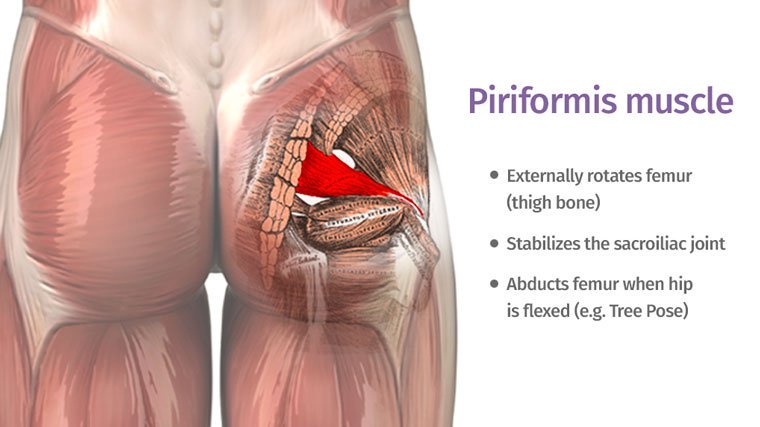
Piriformis (Femur External Rotator)

Piriformis
(external rotator)

  • Originates: Anterior (front) Sacrum
  • Inserts: Greater Trochanter of Femur (outer “hip”)
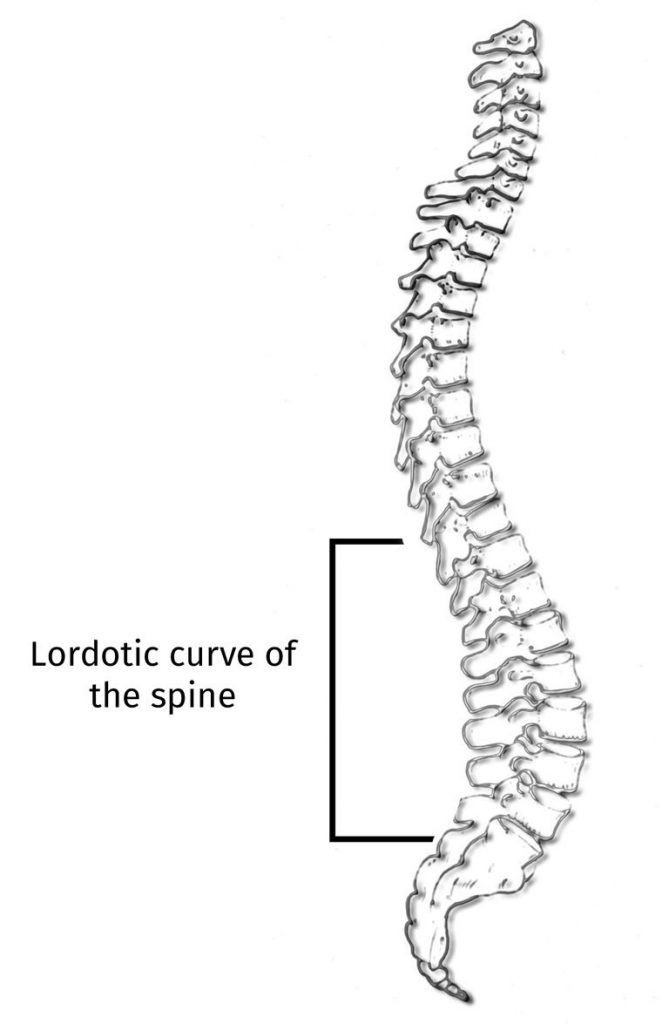
Lordotic curve
Lordotic curve

When the psoas is tight it pulls the lumbar vertebrae into a deeper lordotic curve. This lifts the sacrum and ilium into an anterior tilt.

This can lead to tightness in the quadratus lumborum and strain on the piriformis, which attaches from the sacrum (lower fused part of the spine) to the femur (thigh bone) and is responsible for external rotation of the hip.

A knock-on effect

When the piriformis is tight

It pulls on the sacrum (SI Joint issues may arise), can pinch the sciatic nerve, and can cause iliotibial band tightness, due to the increase workload of the tensor fascia lata to bring the femur back to neutral with internal rotation.

When the iliacus is tight

Consistently over time, it pulls the ilium (hip bones) forward and away from the sacrum, which leads to either SI joint pain and instability and/or opposite side piriformis tightness. This then leads to IT Band tightness due to tensor fascia lata trying to bring the femur back to neutral with internal rotation. 

The struggle to compete

The constant struggle between these four muscles may lead to a permanent deformity in bones and the connective tissues that hold them together. This can result in compressed vertebrae and discs, twisted ilium, separated sacrum-ilium, knee, lower leg, ankle and feet tortion/collapse, as well as compression, manipulation and pain to reproductive organs, intestines and the diaphragm (the major muscle of breathing).

To help prevent and correct these muscles, we need to stretch with postures such a triangle, supine hero, and constructive rest pose and strengthen with reconstructing exercises with weights and resistance bands

If not corrected in a timely manner, fascia - the continuous sheath of connective tissue that weaves around everything - will also start pulling and tugging in the direction of the tight fibres of ilipsoas, quadratus lumborum and piriformis, causing even more discomfort, deformity and pain.

A healthy relationship on the mat

The most effective way to support a healthy relationship between all four of these muscles is with the Constructive Rest Posture.
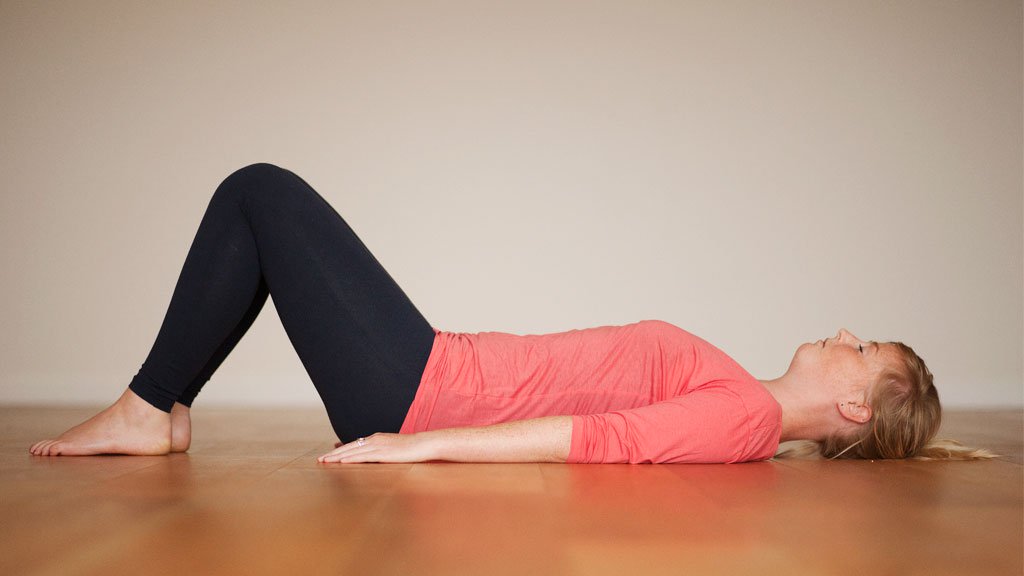
Constructive rest pose
  • Internal rotation of the femurs gently stretches the tight piriformis muscles.
  • Knees lifted in a bent and supported position allows the sacrum, with the aid of gravity, to nestle its way into its rightful place between the two ilium bones. The relaxation of the iliac here is rooted by the resettling of the two iliums.
  • The slight posterior tilt of the sacrum- ilium/pelvis allows for the gentle stretch of both quadratus lumborum and iliopsoas.

Resting in this posture for a lengthened period of time is key in order to allow gravity to be a help in softening and relaxing without unnecessary holding and tension. Happy and healthy these four muscles will be!

Practice in class with Jennilee!

Put what you've learned into practise with this tutorial-style floor Hatha class, focusing on the four muscles discussed. This practice will have us strengthening, stretching and massaging the muscles of the lower back, hips and through the front of the belly - 50 mins, Hatha / Therapeutics / Jennilee Toner.

Jennilee Toner
Jennilee Toner

Jennilee Toner is student and teacher of yoga and human anatomy and the author of The Perfect Chaturanga. She has been practicing Hatha and Vinyasa yoga since 1996, teaching Hatha and Vinyasa yoga since 2003 and teaching experiential anatomy to yoga teachers in training internationally since 2010. She has also been teaching her own Hot Warrior Yoga 200-hour teacher training courses since 2012 and Inner Sanctum Yoga 300-hour teacher Trainings since 2016. Jennilee has been a college professor of Anatomy and Physiology in Upstate New York since 2021.

Nicole06.07.2019
This was helpful in so many ways. Thank you Jennilee?May you please explain the connection between the constant struggle between these four muscles and the collapse of the feet? I also would love to know how exactly the strengthening of these four with weights and resistance bands would look like?
Nicole06.07.2019
That is brillant. Looking forward to the class. Thank you so much?
Jennilee06.07.2019
Hi Nicole! I will be in the studio to film later this month and that would be a great video to film (I'll bring my resistance band just for that!) Tight PSOAS and tight QL can lead to tight hamstrings and calves that will then lead to achilles tendon and plantar fascia issues. Tight piriformis leads to an external rotation of the femur bone which can then lead to arch collapse as the lower leg also rotates and then recompenses for walking. When thinking of exercises...you want to stretch what is locked short tight before you also strengthen. You definitely want to strengthen what is locked long tight/weak. For piriformis you would stretch with figure fours and other pigeon variations, strengthen with your warrior 2's and other externally rotated band work but also strengthen your internal rotators with internally rotated leg lifts (think Barre class:) Look for the class soon:):):)
Jibril27.12.2018
Thank you so much the thorough explanation with the skeleton aid. Your explanation was first class.Hopefully, by doing these exercises, my hip tenderness and pain improve.
Jennilee04.01.2019
I hope so too Jibril!!! I am glad you enjoyed this and I sure do hope it helps:):):) Sending your hips vibes of EASE and RADIANT HEALTH!!!
Ramani13.02.2016
Very useful article. Wish there was an animated video demonstrating how these muscles work, from inside the skin.
Jennilee14.02.2016
I love that...I will keep that in mind Ramani:)
Kirsty17.08.2017
Hi Ramani, just to let you know Jennilee has a class up today on this theme: https://www.ekhartyoga.com/classes/psoas-iliacus-piriformis-quadratus-lumborum-talk-tutorial
Anne Berit12.02.2016
Been there, done that ... Very interesting and informative article, as always, Jennilee. Not much can be done with the cause of my problems but there was, and is lots and lots of room for improvement as for the effects. Doing as told is fine, but for me it is also super important to know the reason for a problem and what exactly (might) fix it. More knowledge leads to better understanding of any problem. The more I understand the better I can apply appropriate measures to change my own situation. Thanks for sharing your knowledge and passion for these things! Knowledge is key for anyone wanting change!
Jennilee14.02.2016
Anne! So much love to you on this Valentines Day:):):)
Denise13.02.2016
Thank you for this excellent explanation of how the muscles/joints interconnect! I much prefer this approach to that I've experienced in physical therapy, which was "do these exercises and don't worry about the WHY or HOW." My right hip has bothered me since I was a teenager - fortunately I have been healthy enough for my body to just compensate around the issue. But now, approaching 40, I find I need to be more and more thoughtful in terms of how I treat my body generally and that hip in particular. I never really considered how the lower back and posture might be so connected! I am thankful that yoga has helped me so much with posture, and with giving myself permission to Step Away From the Desk, and very thankful for this article Jennilee!
Jennilee14.02.2016
Denise! You are MOST welcome:) I send LOVE to you right hip!!!
sharon02.03.2016
could you provide a list of a few videos that focus on the major muscles mentioned in this excellent article. I am feeling a change in chronic muscle contraction (in addition to unequal psoas contraction and pelvis pull to the left) by doing one or two times a day, Esther's 33 minute somatics routine.
Kirsty17.08.2017
Hi Sharon, Jennilee's class on this subject is up today: https://www.ekhartyoga.com/classes/psoas-iliacus-piriformis-quadratus-lumborum-talk-tutorial. Also, if you type 'psoas' into the keyword search, you should find a number of other classes too.
Jennilee02.04.2016
I don't have a list for you as of yet...i do have a happy hips flow on this site:) I can film one to address these muscles/issues the next time I am in studio:)
sharon16.02.2016
have had spasming lower back after misaligned sacroiliac and SI joint lock--so this very thorough explanation with great illustrations helps to explain the chronic muscle contractions. balancing this with the meditation and gratitude program helps to get wayward mind under control. thanks so much. sharon
Jennilee02.03.2016
Sharon...so, so, so happy that this could help:):):)
Anastasia30.06.2018
Thank you Jennilee, that was beautiful!
Jennilee09.07.2018
Anastasia! Thank you so much:) I am so glad you enjoyed!
Alison04.03.2016
Hello again. I have really tight 'hips'? And cant do pigeon or thread the needle type poses or tree either. My question is: when I do try to do thread the needle or reclining eagle (as I reach forward) my head tips back and my chin pokes up creating am uncomfortable arch in my neck . . Any ideas why? Thanks Jennilee superhero xx
Jennilee02.04.2016
If you have any tightness in your erector spine (the extensor back muscles) this could be the cause of your head tipping back. Instead of letting the head go back to the floor in these poses you could stay lifted in the c-curve/ball shape even with the leg variations:) Hope this helps Alison:)
Gael14.02.2016
Waow so interesting, I understand better why my sciatic nerv pinches, however can you give some poses to practise in order to avoid this? Thanks!
Gael03.03.2016
Thanks for your answer! The lying cow face pose is a really good idea! Could you also film a longer (one hour max) kind of power class? Would be nice, I love your energy!
Kirsty17.08.2017
Hi Gael, just wanted to let you know we've published Jennilee's class today so you can practice with her in person (well, on your computer screen!): https://www.ekhartyoga.com/classes/psoas-iliacus-piriformis-quadratus-lumborum-talk-tutorial
Jennilee02.03.2016
Gael! YES:):):) One of the best poses for relaxing is the constructive rest pose (see article:) Then I am a big fan of eagle (more active though), seated spinal twist (ardha matseyendrasana) and the cow-faced pose (gomukhasana). I love doing the last one both seated AND lying on my back:):):) Also...reclining twist variations...with the extra benefit of massaging the area of the sacrum/gluteus maximus:) I am going to film a class on this...I will be at EkhartYoga in a week:)
Elaine19.08.2017
Fantastic article and looking forward to class. After hips aching for some months was pessimistic about degeneration of the hip (am over 50), never really thought it could be muscular - look forward to working on these....
Jennilee23.08.2017
YAY!!! I am so excited for you Elaine:):):) Strengthen in order to support:):):)
tsivia05.07.2018
hi, as a result of trying to solve the psoas weakness in the gym i reached a point of moving with great difficulty. This class has improved the situation alot. thank you (again!). tsivia
Jennilee09.07.2018
I am so glad to hear this practice is helping you Tsivia!!!
Cayleih22.11.2016
Does putting your feet up on a chair during Construction Rest Posture change or enhance the stretch? This is a great article, thank you so much for the insight. I'm hoping after 6 years of chronic right hip pain that increases with sitting, driving, walking, running, cycling, rowing, couch surfing that I may have a breakthrough :)
Jennilee29.11.2016
Cayleigh:) YES!!! I love putting my legs up on the chair (or if hamstrings allow it...legs up the wall). This allows gravity to be more of a factor in allowing the bones of the femurs to nestle into the sockets and the sacrum to nestle into the ilium. I love using the word "nestle" for these actions because Constructive Rest Posture is SO YUMMY! Also, we need to give ourselves ample time in the pose to allow it to really work:):):) (which adds to the yumminess!)
Ami17.02.2016
Thanks for a great article. I would very much like to see a class or programme to address the problems described. I know from experience that when my piriformis muscles tighten the back aches terribly, and I'm a bit concerned about the fact that both my mother and my uncle are stooped forward and haven't walked upright for years. I don't want to end up like that. I feel that I don't have enough knowledge to create a yoga session that wold help me with this.
Jennilee02.03.2016
Ami! Will do...I am heading back to Esthers next week and will film this for sure:):):)
Kirsty17.08.2017
Here's the class, Ami - up today (better late than never!): https://www.ekhartyoga.com/classes/psoas-iliacus-piriformis-quadratus-lumborum-talk-tutorial
Rachel09.05.2017
Ah it all falls into place! I definitely have this issue. Are there any particular strengthening exercises you'd recommend alongside the stretches you've mentioned? So interesting, thank you.
Jennilee16.05.2017
Rachel:) One of the best strengthening exercises I feel is a very little controlled one: Lying on back, legs extended (or one knee could be bent with foot on ground), lower back lengthened and lower abdominals lightly engaged, simply lift the extended leg off the floor 4-6 inches...even pulse the lift:):):) Let m know how that feels/works for you:):):)
Tekela14.01.2017
Hi Jennilee, just reading this very informative article again ... In the comments you mention a few months back that you will do a class to address this muscle group. If you have, can you give us a link here? Thank you so so much for all you share with us on Ekhart yoga, Namaste x
Jennilee16.01.2017
I did do a class on Hip Therapy and Long Luxurious Legs but I will film a specific class for this article when I return to the studio in March:):):) Tekela, Thank YOU for being part of the Ekhart Yoga family!!!
Kirsty17.08.2017
Hi Tekela, just to let you know we've published Jennilee's class today: https://www.ekhartyoga.com/classes/psoas-iliacus-piriformis-quadratus-lumborum-talk-tutorial
Selin17.02.2016
Very informative! the complexity of these muscles and their relationship was something i always felt existed but never heard a scientific explanation like this one. thank you for that! i also like to share that i was able to ease my coccyx pain/problems through yoga and i know it had a lot to do with releasing tension in my hips. another thing that helped was the lacrosse ball. not sure what you think of that...
Jennilee02.03.2016
Selin! Yes...rolling on it for the deep massage is awesome!!! I am a big fan...I keep a tennis ball by the TV so that at night I can roll around on (staying away from bones...just soft tissue:) Helps IMMENSELY!!!
Timea31.03.2016
Hi Jennilee, What a coincidence this popped up on my fb page yesterday. These naughty muscles wake me up in the last 4 days. I'm printing this out, as it is not the first time. Many thanks for sharing your knowledge. Can Scheuermann and Scoliosis emphasise these problems? Happy painless day everyone! :) Timea
Jennilee02.04.2016
Timea:) I am so glad you enjoyed this! YES THEY CAN!!! We can always inquire is it the muscles that pull our bones out of alignment of is it the misalignment of our bones that tighten the muscles and bund up the fascia. One leads to the other and then leads a little more back to the first. Thank you for your comment and your question:):):) PAINLESS DAY TO YOU!
Jenn07.06.2017
Hi Jennilee, this article explains my pain problems perfectly! Have you filmed a class on this article yet? I´d love to take it!! Thanks for your insight.
Jenn08.07.2017
Wunderful! Would be great if you could let us know when it´s up - looks like there are a lot of people here eagerly waiting to take your class :-) Thanks!
Jenn19.08.2017
Great! Thanks for letting me know!
Jenn22.10.2017
Just wanted to say that this class is wonderful! Thanks so much for the insight and the perfect exercises!
Jennilee28.06.2017
Jenn!!! So sorry to hear of your pain problems! I did film a class one of the last times I was in the studio...it should be released sometime in the near future:):):)
Jennilee13.07.2017
Hello there Jenn...just got word that they are going to push that class up and release it very soon! YAHOO!!!
Jennilee31.10.2017
Jenn! I am so glad you enjoyed:):):) You are so welcome:)
Kirsty26.06.2017
Hi Jenn, sorry for the delay replying to your question. Jennilee filmed a couple of classes on this theme - stay tuned! :-)
Kirsty17.08.2017
Hi Jenn, just to let you know Jennilee's class to accompany this article has been published today: https://www.ekhartyoga.com/classes/psoas-iliacus-piriformis-quadratus-lumborum-talk-tutorial
joanne17.02.2016
Had been a runner for 30 years...This is my problem area. However now that I am involved with yoga I see improvement every day. This article was very informative. keep them coming
Jennilee02.03.2016
Joanne! Yes...for runners especially...constructive rest pose as well as the deeper poses of eagle, seated spinal twist (as well as reclining versions) and Cow-Faced Pose (both upright and lying on back:):):) Will do!
Lisa02.03.2016
Thanks Jennilee! good article and easy to understand explanation of the relationship of these muscles. Very helpful <3
Jennilee02.04.2016
Thank you Lisa:) So glad you enjoyed!:)
Christine08.03.2017
Just taught a psoas class and this is perfect as a follow up. I see now why my whole body loves CRP. Thank you.
Jennilee08.03.2017
Christine! I know...so does my body!!! LOVES CRP!!! You are so welcome:):):)
Angie31.07.2017
Hello! Thank you for this very easy to understand and apply information about these 4 critical muscle movers. I am working hard to get these muscles under control .. I see that you have filmed this class and it has maybe been released but what is the name of the class? Thank you again!
Jennilee31.07.2017
Hi Angie! I think its about to be release very soon! We had to finish the "5 Elements" series and then the brilliant Ekhart yoga home team was going to move this class up to be next:):):)
Kirsty17.08.2017
Hi Angie, here is the class: https://www.ekhartyoga.com/classes/psoas-iliacus-piriformis-quadratus-lumborum-talk-tutorial (published today) Hope you enjoy it!
Laura09.11.2017
Absolutely loved the routine it's taught me so much☺
Jennilee10.11.2017
I am so happy to hear this Laura:):):) SO GOOD!!!
Freja16.05.2018
I just signed up because of this presentation. Great stuff!
Jennilee22.05.2018
I am so happy to hear this Freja!!! Welcome to Ekhart Yoga:):):)
Francesca05.10.2019
This is AMAZING. I've been struggling increasingly with chronic back pain for 5 years. I have seen 15 different specialists and NOBODY is helping. I am convinced I have psoas sydrome and I'm trying every which way to help myself but nothing I've found so far has been thorough enough for me to feel safe in treating this at home. THIS is what I've been so desperately searching for. I'm three days into the stretches. How long do you think the stretches will begin to settle me back to normal, bearing in mind the psoas tightness has herniated L4, given me labral tears and a twisted pelvis? I'm being very gentle and staying warm.
Jennilee09.10.2019
Hello Francesca!!! So glad to hear that this brought you relief:):):) I find that with my labrum tear (and SI Joint Laxity) its a daily maintenance:) When I do my strengthening and stretching exercises I am good for the whole day!!! If I don't I may feel discomfort but never like I would if I didn't take care:) People definitely heal at different rates and paces...I hope for you you will feel tremendous relief immediately with less and less pain and discomfort as time goes on:):):)
John27.10.2019
Hi Jenni Thanks for this extremely informative post. Ive had chronic shoulder and now hip pain for a number of years and it has worstened my anxiety and panic disorder. This routine has been helpful, but I still feel tightness/cramping sensation in my TFL. My guess is that my glute maximus is not activating properly. I also think my core is very weak (feels weak) and the right side (affected side) feels weak from prolonged muscle imbalances Despite having seen a physio on a weekly basis for the past 4 years or so I still havent been able to find anyone to fix my issues. At a point of desperation and any guidance would be appreciated. Do you know which routine on this site might be able to help? Thanks :)
Jennilee28.10.2019
Hi John! I am glad this has been helpful andI am sorry to hear your still in pain! Is it opposite hip to opposite shoulder? Is could be a fascia issue as well as muscle tension/tightness! Explore some of my fascia classes where I really focus on the diagonal functional lines! Often TFL/IT Band issues can be from the opposite shoulder tightness/tension/habitual patterns! Hope this helps:):):) Let me know!!!
jantz14.11.2019
I joined for the free trial and a month payment and for some reason cannot get access to the video! I am so excited to see it! I have been having hip trouble for two years almost and I think this is the key!!!! I'm hoping! How do I get access? :).Jantz
Kirsty14.11.2019
Hello and welcome to EkhartYoga! We will email you directly about the issues you have accessing the video.
Abid26.04.2021
Jennilee, I really appreciate your research and way you explained the problem. It helped me lot, as I was focusing on only releasing piriformis tightness and not the muscle group all together. Keep doing the good work.