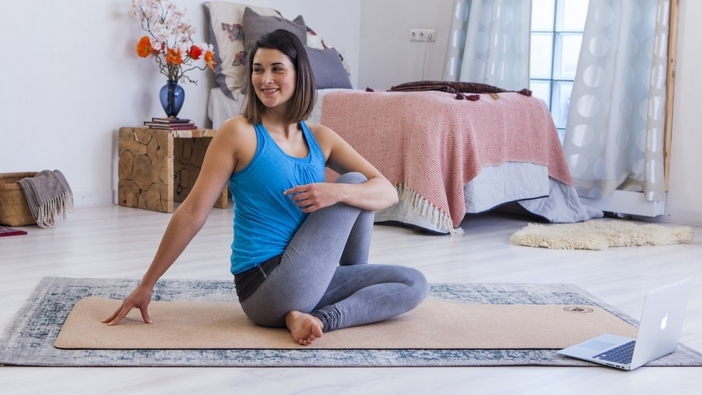
The piriformis the little muscle causing trouble
In part one of this series I gave an overview of Sciatica: what is it and can yoga help? In this article we look in more detail at one of the major causes of sciatic pain. We'll look first at the anatomy of the hip and the piriformis muscle and then which yoga poses can help with piriformis syndrome.
A brief anatomy of the hip
Whereas the shoulder girdle is a spacious and shallow joint comprised of three bones (clavicle, scapula and humerus) the hip girdle is comprised of only two: the femur in the socket (or acetabulum) of the ilium. This hip girdle is a heavily layered area of the body. It's made up of muscles, tendons, ligament, fascia, and fat - the qualities of these different aspects make it a very stable and strong part of the body:
- The ligaments holding the femur into the ilium are thick and strong.
- Numerous external rotator muscles (the piriformis being one of them) which move the femur are small and short, yet particularly strong.
- The layers of the buttock muscles (gluteus maximus, gluteus medius and gluteus minimus) that move the femur into flexion, abduction and internal/external rotation range from wide, thick and strong to smaller, multi-purposeful and also strong.
- The adductor muscles of the inner thigh are numerous and range from small (pectineus near the groin) to long and large (adductor magnus can act much like a hamstring).
- Lastly, the Ilio-Tibial band which helps support and stabilize the lateral femur, and many of the above-mentioned muscles, is a thick, fibrous band that acts like both a ligament and a tendon.
All of these muscles work brilliantly together to encourage both movement of the femur in the hip socket (flexion, extension, abduction, adduction, internal and external rotation) and stability in the form of joint integration.
The Piriformis muscle
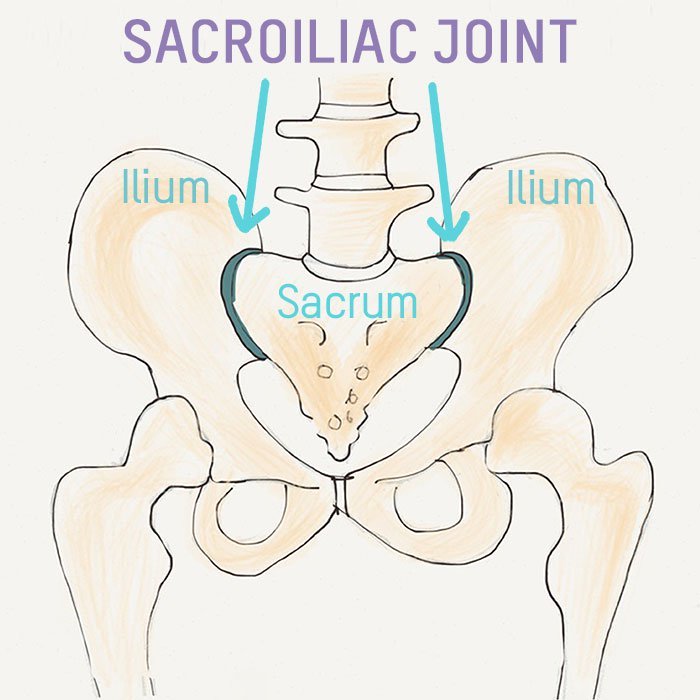
The Piriformis is one of the six external rotators (the other being quadratus femoris, gemellus inferior, gemellus superior, obturator externus and obturator internus) of the femur bone. This pyramid shaped muscle originates from the anterior portion of both the sacrum and ilium, and also from the joint capsule of the sacroiliac joint.
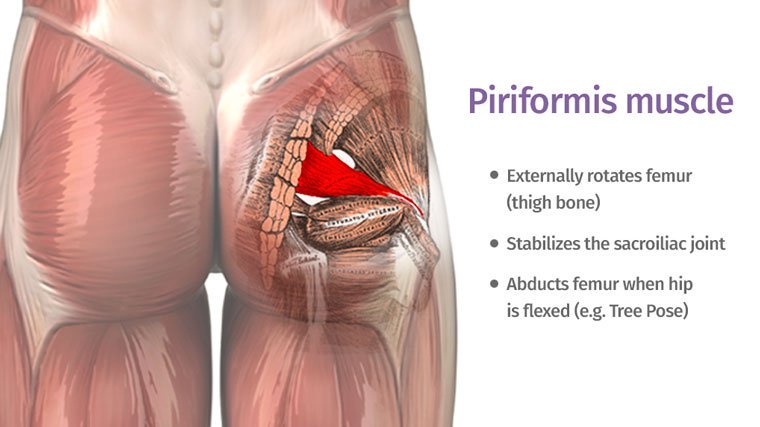
It inserts on the upper medial portion of the greater trochanter (most superior part of the lateral femur). The only muscle of the external rotator group to originate from the sacrum, the piriformis muscle also acts as a sacroiliac joint stabilizer.
In addition to being an external rotator of the femur in the acetabulum of the ilium, the piriformis also abducts the femur when the hip is flexed for example in Vrksasana (Tree Pose) and Utthita Hasta Padangusthasana (Hand to Extended Big Toe Pose).
If one piriformis muscle is tighter than the other it can negatively affect the balance of the sacroiliac joint, causing pain and/or instability. So how can a little muscle nestled so deeply in your hip cause so much debilitating pain? As I talked about in the previous article in this series, the sciatic nerve runs below the piriformis muscle and on some people it actually travels through the fibres of the piriformis muscle. When the piriformis muscle is tight it can pinch on the sciatic nerve. This is Piriformis Syndrome - also sometimes referred to as "runner's butt"!
The good news
Most symptoms of sciatica and piriformis syndrome can be alleviated and, usually, entirely prevented by a consistent, safe, intelligent and therapeutic yoga practice. Moving the spine and the femur in the six natural directions of flexion, extension, lateral flexion right and left (abduction and adduction) and twisting right and left (internal and external rotation) guarantees that the muscles that support these actions are both strong and supple and the joints that perform these actions are both spacious and stable. See below for some suggested yoga classes for members.
Where the spine is concerned, always seek to find length and strength in poses before going for depth. For the hip, a deep understanding of just how stable the hip girdle is and the six movements necessary to keep it harmoniously operating in its full range of motion will go a long way towards a life of health, vitality and longevity.
Yoga poses to stretch the piriformis
In order to alleviate tightness and tension in the deepest muscles of the buttocks yoga asanas such as:
- Ardha Matsyendrasana (Half Lord of the Fishes Pose),
- Garudasana (Eagle Pose),
- Gomukhasana (Cow-Face Pose),
- Virasana (Hero Pose) and
- Raja Kapotasana (King Pigeon Pose)
Ardha Matsyendrasana, Garudasana, and Virasana are so perfect because they all emphasize internal rotation and adduction of the flexed femur in the hip socket. This is the counterpose of the piriformis’ main actions of external rotation and abduction.
Gomukhasana (especially with a forward fold) and Raja Kapotasana (also with a forward fold) are perfect poses for the piriformis muscle because when the hip is flexed beyond 90 degrees the piriformis muscle changes its job and acts as an internal rotator, abductor and extensor of the femur bone.
Raja Kapotasana and other great variations of Forward Folding Pigeon (like Double Pigeon and Supine Figure Four/ Thread the Needle Pose) encourage the external rotation normally seen as a pirifomis muscle action but with the hip flexed so deeply it now effectively stretches the muscle.
Working on the Piriformis in yoga
Try it in class with Jose de Groot
Stretch and stimulate the piriformis, IT-band and glutes with several Yin poses. This long session is great for everyone with tension stored up in the hips.
More anatomy from Jennilee:
If you're interested in learning more about anatomy, read:




Jennilee Toner is student and teacher of yoga and human anatomy and the author of The Perfect Chaturanga. She has been practicing Hatha and Vinyasa yoga since 1996, teaching Hatha and Vinyasa yoga since 2003 and teaching experiential anatomy to yoga teachers in training internationally since 2010. She has also been teaching her own Hot Warrior Yoga 200-hour teacher training courses since 2012 and Inner Sanctum Yoga 300-hour teacher Trainings since 2016. Jennilee has been a college professor of Anatomy and Physiology in Upstate New York since 2021.