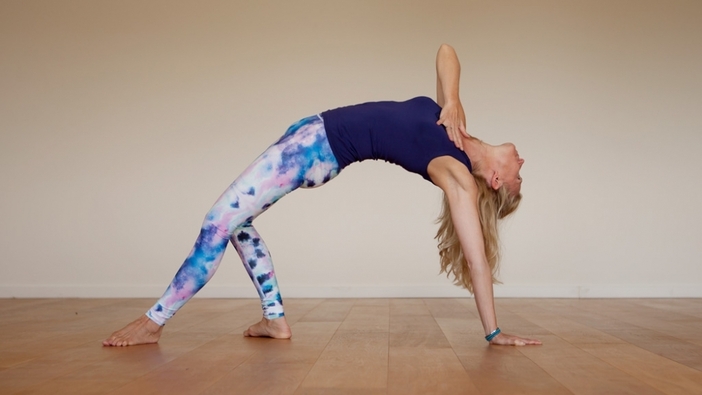
The importance of breath in yoga
In this article I talk about different ways the breath influences our yoga practice; how the breath and mind are closely connected and how this awareness of the breath gives us a tool to work with the mind.
Breath and Asana
Biologically
When focusing on the breath during our asana practice, the control of the breath shifts from the brain stem (medulla oblongata) to the cerebral cortex (evolved part of the brain) due to us being aware of the breath. It's in that moment, when we are aware, when the magic starts to happen. The mind will become quieter and a calm awareness arises.
Emotionally and energetically
As a result emotional stress and random thoughts are less likely to occur. So basically the whole system gets a break. The energy, the prana, begins to flow more freely pushing through any emotional and physical blockages and thus freeing the body and mind. Which results in the “feel good” effect after a yoga practice.
So we can safely say that breath has an intimate relationship to the overall movement of prana (life energy) throughout the entire body.
Physically
In our physical practice breath also has everything to do with our structural alignment and the patterns in which we hold, perceive and move the body. Breath awareness can eliminate joint compression and other imbalances from one’s postures and attitudes. Awareness of breath is also the foundation for flowing seamlessly in movement through an Ashtanga Vinyasa practice.
Breath and mind
If you have practised some serious meditation you will have noticed and seen that when the breath moves, the mind moves as well. Of course, this works both ways so as the mind moves, the breath moves too.
The breath gives us a tool with which we can explore the subtler structures of our mental and emotional worlds. When the breath changes, it tells you that something is happening in your mind.
This basically means that the breath gives us a tool with which we can explore the subtler structures of our mental and emotional worlds. When the breath changes, that tells you that something is happening in your mind. When something happens in your mind, like a disturbing thought, for example, your breath will reflect that back to you.
You will then understand that because the breath and mind are so connected, awareness and mindfulness of breathing can lead to insight into the nature of mind. Insight into the nature of the mind leads eventually to freedom from suffering.
Freedom from suffering
Let me quickly explain that freedom from suffering isn’t the same as freedom from pain. Pain and loss etc. is inherent to life. Suffering, however, is what we do with the pain, do we keep repeating it in the mind, creating stories and thus feeling the pain over and over again (suffering), or can we just feel the pain as a sensation in the moment, without stories, and then let it go?
Ujjayi breath
Now the benefits of being aware of the breath within your yoga practice have been made clear, let me finish this article with an explanation of the Ujjayi breath.
This pranayama is usually done in association with asana, unlike some of the other forms of pranayama. Ujjayi breath is the type of breath used in a Vinyasa/Ashtanga style of practice. It is the main style of breathing used when you flow and practise the more strenuous poses. When you start to cool down and move more into the relaxing poses, it's time to let go of this way of breathing and to allow the breath to be more natural. Ujjayi breath is both relaxing and energizing. Sometimes I find myself spontaneously breathing this way in deep meditation or during deep absorption or concentration.
How to practise the Ujjayi Breath:
- Close your eyes, imagine looking down the nose, softly smile and begin to lengthen the breath.
- Next, close the back of the throat a little like you do when you whisper something. You should now feel the flow of air moving through the back of the throat. Keep the mouth closed while you do this. The sound of your breath will be a little like the sound of the wind through the trees.
- Listening to the breath allows the breath to fully flourish. Keep the sound and length of the breath the same on the in and out breath.
- Practise this type of breathing during your asana class and whenever else you feel like it.
Breathing with sound - ujjayi breath
Explore the sound of the Ujjayi breath, using 4 stages to not only contract the epiglottis but equally important, relax the throat and let go of the sound.
Join our Ten Days of Pranayama Programme and explore the benefits of pranayama.
Love
Esther x

Esther Ekhart, face and founder of EkhartYoga, brings years of personal yoga and meditation practice, therapy training and study of yoga philosophy into her teaching.