The Bandhas - preventing yoga injuries
To be light on this earth - activate and engage your bandhas!
In the first article of this series I shared my “clap-your-hands” enthusiasm for the ever-expanding interest in yoga. After 19 years of study and practice I am still a big, big fan - I LOVE YOGA! I love everything about it! As I watch this momentum pick up of more and more people practicing and benefiting from yoga, in the midst of my excitement, I have to admit I find myself often wincing and cringing when I see injurious postures and sequences being taught and practiced.
Connecting to our breath and the natural ways breath moves our bodies is the foundation to safely moving both on and off the mat. I talked about this in my previous article - Preventing yoga injuries: the Breath, Prana and the Vayus. The next step in preventing yogic (and other) injuries is to actively support and inspire these five movements of Prana, with added focus on the bandhas.
What are these bandhas everyone is talking about?
Looking at the human body through the lens of the more physical, Western point of view, “bandhas" can simply be taught as:
The activation and engagement of muscle fibers, in strategic areas in the body, that support in the toning and lifting of the systems of the body against the natural laws of gravity.
Gravity does what gravity does best - pulls us continuously down to the face of this earth. Since the day we were born, we unconsciously and continuously work to uplift ourselves up against this downward magnetic force, and the bandhas support this lift.
The three major bandhas, and their approximate locations in the body are:
- Mula Bandha - the pelvic floor muscles
- Uddiyana Bandha - the abdominals up to the diaphragm
- Jalandhara Bandha - the throat
There are also two minor bandhas
- Hasta Bandha - the palms of the hands
- Pada Bandha - the soles of the feet
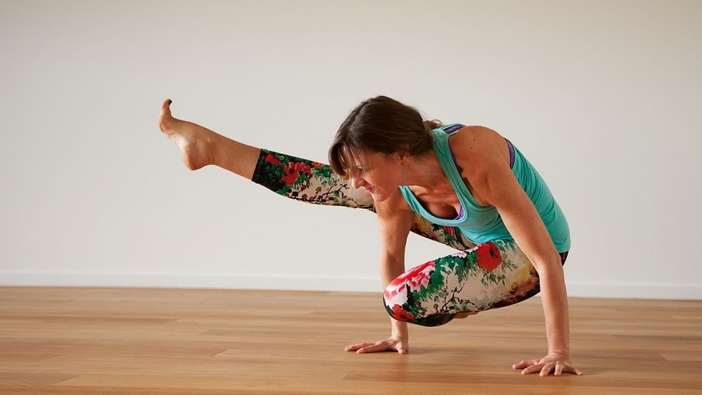
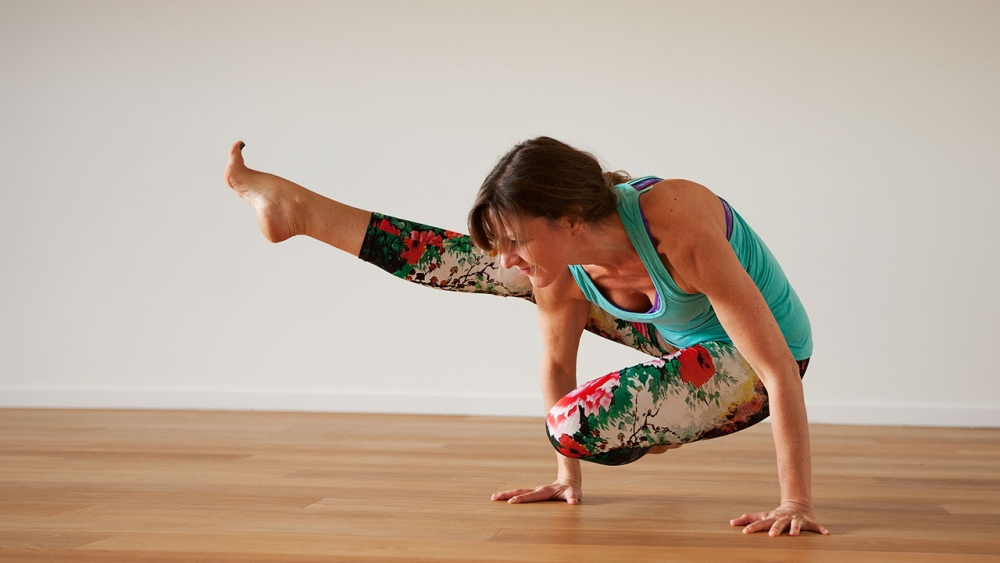
Yogis know that two of the key components within the fountain of youth (YOGA) are turning upside down in inversions, and activating our bandhas in order to get lighter on this earth. What interests and excites me is the positive effect activating bandhas has on our joints - especially in postures that require a lot of weight bearing - like arm balances.
What interests and excites me is the positive effect activating bandhas has on our joints - especially in postures that require a lot of weight bearing - like arm balances.
Energetically, “seeing” the human body through the more subtle yogic point of view, Bandhas are “locks”, or valves, in specific areas in the body, that once engaged can control (retain) dissipating pranic energy.
Mastering the use of these helps in the process of drawing up of Shakti Kundalini energy into the body. Specifically up into the Sushumna Nadi, the central channel that correlates with the central nervous system housed in the spinal column. It is written in the Hatha Yoga Pradipika, "The union of the Ida and the Pingala is effected in order to bring about immortality."
Mula Bandha - Root Lock
Physical qualities of Mula Bandha
Mula Bandha is your “Root Lock”. Physiologically, this bandha is a diamond shape hammock of muscles that spans the space between the bones of the pubis, the two ischium (sitting bones) and the coccyx. These muscles form part of the pelvic floor.
Activating and engaging these pelvic floor muscles (using a subtle lift action) brings much needed attention to the space between the pubis (front) and the coccyx (back). This awareness of the space between the pubis and coccyx in yoga practice can help alleviate pre-existing tightness, tension and/or lower back pain and can counteract any future possibility of lower back injury - both on and off the mat.
Energetically, bringing our awareness to Mula Bandha brings awareness to the dormant feminine creative energy of Shakti Kundalini, at the base of the Sushumna Nadi.
• Read more on how to engage Mula Bandha, its energetic qualities and relationship with the chakras
Uddiyana Bandha - Upward Flying Lock
Physical qualities of Uddiyana Bandha
On a physiological level, Uddiyana Bandha is the active engagement of abdominal muscles. You'll hear it taught in class as something like “draw your navel in towards your spine and up towards your ribcage”. It is engaged at the bottom of an exhale (when abdominal muscles are most effectively engaged). This both tones and creates space for the abdominal organs as the diaphragm is drawn upwards under the ribcage. This toning increases the efficiency and productivity of the diaphragm muscle. Increasing the range of motion of the diaphragm also ensures that dukkha (stagnate energy/stale air) that remains in the lung sacs is successfully massaged up and out.
In addition to supporting, toning and lifting our insides engaging Uddiyana Bandha allows us yogis to be the superheroes that we are - activating Uddiyana Bandha enables us to fly!
Watch Francesca Giusti's class: Mula Bandha a tutorial for women
It's quite obvious when a yogi is muscling their way into inversions versus allowing the Pranic flow to be directed inward and upward via the bandhas. It is in the muscling through poses without the support of breath and bandha activation that we find many root causes of on the mat yogic injuries.
Uddiyana Bandha, Shakti Kundalini and the Chakras
Energetically Uddiyana Bandha (with the continuous support of Mula Bandha) propels the already awakened Shakti Kundalini energy up through the Sushumna Nadi affecting change in the next two chakras:
- Anahata (heart chakra) keywords: love, compassion, kindness
- Vishuddha (throat chakra) key words: truth in communication, listening to the truth of others
Uddiyana Bandha encourages the evolution of one’s Self from a limited self-centered reality into one that is love based.
Jalandhara Bandha - Throat Lock
Jalandhara Bandha is the “Throat Lock”. Engaged after the sequential order of Mula Bandha and Uddiyana Bandha, the muscles of the front of the neck (sternocleidomastoid and scalenes) draw the chin towards the lifted superior portion of the sternum stimulating the thyroid (butterfly-shaped endocrine gland situated alongside the front of the windpipe). One of the main physiological benefits of engaging the throat lock is the stimulation of the thyroid which balances the regulation of hormones responsible for efficient metabolism (growth and maturation).
Whereas Mula Bandha and Uddiyana Bandha can be activated and mastered in both Pranayama practice and in Hatha Yoga postures and transitions, Jalandhara Bandha is usually reserved for Pranayama practice and a few Hatha Yoga postures such as Setu Bandha Sarvangasana (Bridge pose) and the mother of all poses, Salamba Sarvangasana (Supported Shoulder Stand).
Jalandhara Bandha, Shakti Kundalini and the Chakras
Energetically, activating Jalandhara Bandha continues the upward movement of Shakti Kundalini energy from the lower three chakras (from the activation of Mula Bandha), the fourth and fifth chakras corresponding to the heart and throat (from the activation of the Uddiyana Bandha) and into the sixth (Ajna) and seventh (Sahasrara) chakras.
- Ajna (the third eye/ brow chakra) key word: intuition, and
- Sahasrara (the crown chakra) keywords: connection to cosmic consciousness.
Jalandhara Bandha truly connects the body and the heart with the mind.
Maha Bandha - The Great Lock
Engaging all three bandhas (Mula, Uddiyana and Jalandhara) is known as Maha Bandha or “The Great Lock”. The benefits of engaging all three are also incredibly “great” for every system in the body. Activating Maha Bandha increases the strength of the diaphragm and the efficiency of the respiratory system, tones the heart and increases the efficiency of the cardiovascular system, stokes the digestive fires and tones the abdominal organs increasing the efficiency of the systems of assimilation, digestion and excretion, and the stimulation of the thyroid and other endocrine glands increases the overall wellness and efficiency of the bodies natural ability to grow, mature and heal itself.
Also, as a key component of the practice of Pratyahara (withdrawal of the senses), practicing Maha Bandha is quite relaxing for the nervous system as all energy is focused on the dynamic equilibrium of the internal environment rather than the chaos of the external environment with its uncontrollable influences and circumstances.
In ancient yoga texts Mula, Uddiyana and Jalandhara bandhas are often illustrated in seated postures such as Sukkhasana (Easy Pose) and a straight back variation of Janu Sirsasana (Head to Knee Pose), and moots the time in a pranayama practice before meditation. In modern day yoga practices we find ourselves in so many different postures, shapes and transitional movements that it is hard to find the balance between strength (gross muscle activation) and softness (subtle muscle activation) necessary to fully engage our bandhas. But quoting Pattabhis Jois, “With practice all is coming.” Activating and engaging our three major bandhas greatly supports and inspires a safe and graceful yoga practice.
Hasta and Pada Bandhas
Two minor bandhas that play an important role in injury prevention throughout modern day active yoga practices are the bandhas of the feet (Pada Bandha) and the hands (Hasta Bandha). It is common knowledge among yogis that postures need to start from the ground up. Creating a strong and stable foundation will increase the physiological and energetic benefits of each and every pose. While standing, even before fully engaging Mula Bandha, it is wise to bring awareness to the four corners of the feet and the energetic lift of the arches by the muscles on the inner and outer lower leg.
In postures that require the hands to hold the weight of all or most of the pose (Plank, Arm Balances etc.) before fully engaging the other bandhas to support the internal environment, it is wise to start with what is touching the earth, root down through the pads and mounds of the thumb and fingers, and energetically draw/suction upwards through the center of the palms, creating a lift upwards through the hands, wrists and lower arms. This action will help protect the wrists in yoga poses - read more in Yoga therapy for your wrists.
To be light on this earth - activate and engage your bandhas!
So to bring it all together I go back to my opening line - engaging the 3 major and two minor bandhas will enliven, uplift and strengthen the bones, connective tissues and surrounding joints in weight bearing postures and transitions. When practiced in conjunction with intimate awareness of and connection to breath and the natural movements of Prana, they are key components to both on and off the mat injury prevention.
Love
Jennilee
Class for Ekhart Yoga members:
Watch Clayton Horton's short tutorial on Uddiyana and Mula Bandha from the Ashtanga Yoga perspective
Read all the articles in Jennilee's 5-step series on preventing yoga injuries:

Jennilee Toner is student and teacher of yoga and human anatomy and the author of The Perfect Chaturanga. She has been practicing Hatha and Vinyasa yoga since 1996, teaching Hatha and Vinyasa yoga since 2003 and teaching experiential anatomy to yoga teachers in training internationally since 2010. She has also been teaching her own Hot Warrior Yoga 200-hour teacher training courses since 2012 and Inner Sanctum Yoga 300-hour teacher Trainings since 2016. Jennilee has been a college professor of Anatomy and Physiology in Upstate New York since 2021.