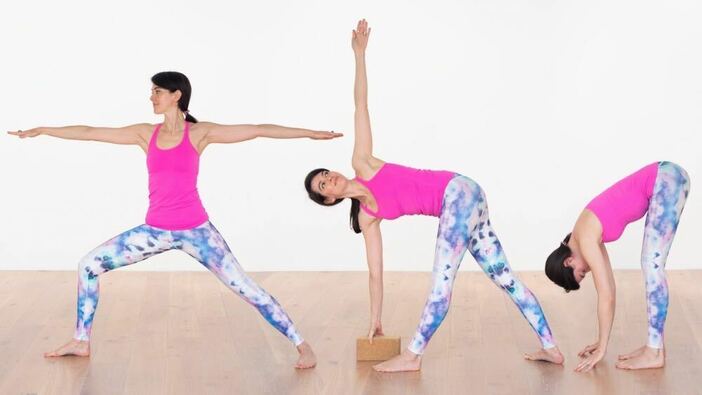
Planes of movement in yoga
In my efforts to be completely transparent I have to admit that it took me many fitness trainings, two college anatomy and physiology courses, 950 hours of massage therapy school, and two 200 yoga teacher trainings before I really grasped the concept of Planes of Movement - the directions in which, through space and time, a living being moves its body.
Now, eighteen years later, exploring our body in all planes of movement is one of my favourite things to teach in a yoga class! In this article I want to share with you my passion for human anatomy, anatomy of movement and methods of recognising them in order to undo the habitual patterns we find ourselves continuously in, both on and off the yoga mat.
1. The Sagittal Plane - living in the age of the forward bend
Out of the three planes of movement (Sagittal, Coronal and Transverse) many of us spend most of our waking lives in the Sagittal Plane, a plane of movement where flexion and extension take place.
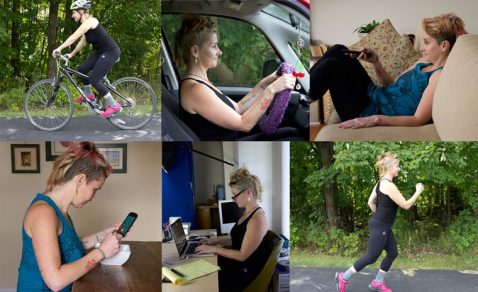
Sitting at a desk, eating a meal at a table, watching TV on a couch, driving a car, riding a bike, running, skiing or rowing, checking our smart phones - all of these activities take place in the Sagittal Plane. Day in and day out, from the moment many of us wake up in the morning to the moment we rest our heads on the pillow to sleep, it's most often the Sagittal Plane that gets explored.
Tensions and pain due to an exaggerated lordotic curve of cervical spine and exaggerated kyphotic curve of the thoracic spine (experienced when the head is hanging forward and chest is 'collapsed') are also products of living a habitual life in the Sagittal Plane. We have to remember that gravity is doing its best to attract us the earth (essentially shrinking us over time); we do not need to accelerate the aging process with living a life limited to the flexion portion of the Sagittal Pane.
2. The Transverse Plane - turning and twisting
Out of the other two planes of movement (Coronal Plane where adduction and abduction take place and Transverse Plane where we turn and twist) it is the Transverse Plane we move most often in. Unfortunately, for most humans, this plane of rotation does not get explored evenly both ways (both sides of the body).
From sleeping on our belly with the head always turned to right or left, turning our heads to look over shoulder while driving or biking, turning towards phone, computer or customer continuously while at desk, swimming and only turning head to one side, surfing or snowboarding always to one side, reaching for the toilet paper role that is always to the left or right, twisting to hit the tennis ball, golf ball or baseball always on same side...
In order to reverse these habitual twisting patterns, in addition to switching sides in the above-mentioned activities, both yoga and strength training need to be incorporated into one’s daily life.
3. The Coronal Plane - spreading out!
There are not many people whole spend a lot of their time in the Coronal Plane. Speed (ice and rollerblade) skaters, horseback riders, kickboxers/martial artists, surfers, dancers and yogis are among those who find themselves spreading out wide repetitively. That’s why it is so great that yoga is so popular as a method of cross-training...it encourages many seemingly healthy and fit people to branch out of their repetitive motions in both the Sagittal and Transverse Planes and encourages them to spread out wide in the Coronal Plane.
Using yoga to explore all three planes
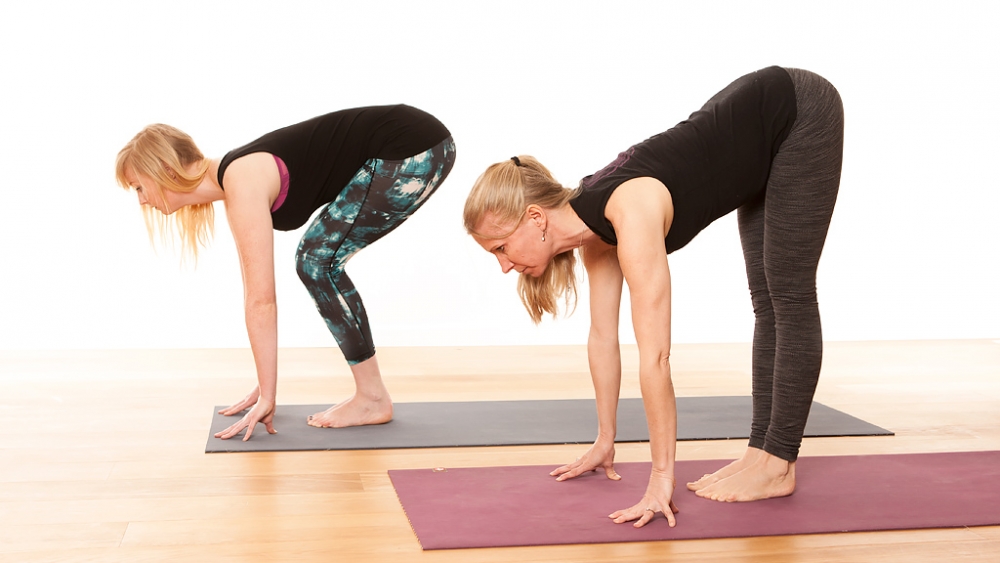
Ardha Uttanasana (Saggital Plane)
Even in yoga we can find ourselves moving more in one plane of movement than the others. Classical Sun Salutations, although brilliantly designed to warm-up and stretch the body systematically, only explore the Sagittal Plane (flexion and extension).
It is only when we start adding in our Warrior Two’s, Triangles and Wide-Legged Forward Folds that we venture out into the Coronal Plane of adduction and abduction.
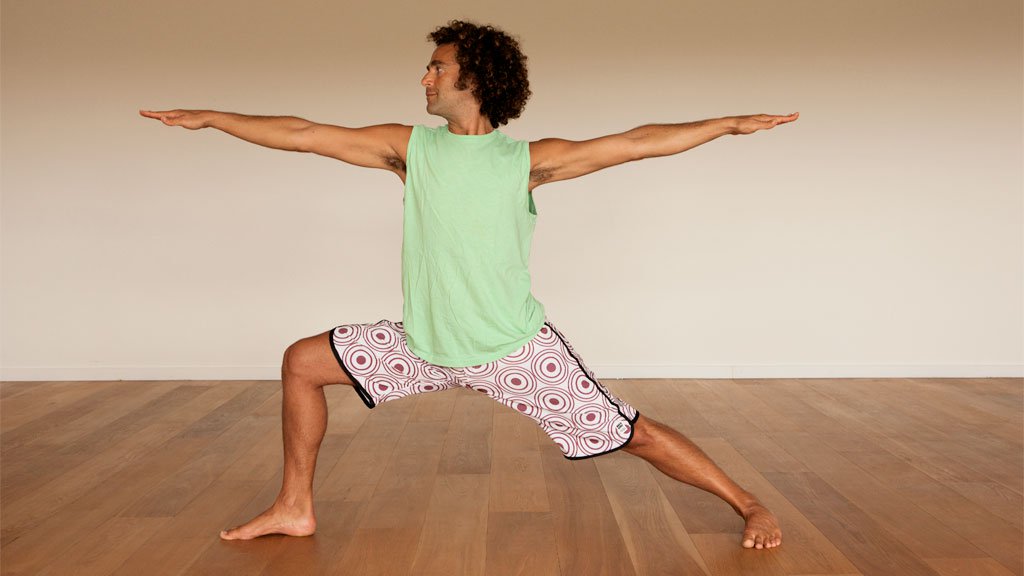
And, if a practice is lacking in a sufficient amount of twists (moving in the Tranverse Plane thorough spinal warm-ups, twisting lunges, revolved triangle and half moon), then the detoxifying benefits of that sort of internal massage are sorely missed.
If your favourite yoga practice emphasises a lot of movement in one plane of movement it is helpful to balance the internal systems of your body by adding poses (or activities) that take you into other planes of movement.
For example, if you practice a lot of Power Yoga (many Chaturangas Dandasanas) and/or Core Yoga (many abdominal exercises such as Knee-to- Nose Postures) make sure you balance your body out with poses that extend the body (working systematically into your deeper backbends).
Remember, as earlier stated, many of us live our lives in a forward bending shape. We need to make sure we come to the yoga mat and balance our systems with back bends (always remembering to cluster your deeper backbends after much warming up and then stabilize spine in a neutral position for many breaths before venturing into the later, deeper forward bending portion of your practice).
Open up and play
I believe that once we understand the three planes of movement our body is meant to explore itself in (Sagittal, Coronal and Transverse) we can’t help but be more inclined to move, dance and express ourselves in all three of them. It’s like waking up to a whole new world; we are compelled to reach out and through, twisting and turning and even jumping out wide. Dancing and playing becomes natural, even necessary. So go out there, get creative and explore the myriad of ways and shapes your body is capable of moving into!
EkhartYoga members
Explore the different planes of movement in Wake up and Warm up - a 30 minute, Hatha / Vinyasa Flow class with Jennilee, which warms and wakens up all the muscles and joints of your body.
More anatomy articles
- 5 approaches to stretching in yoga
- The Psoas, Iliacus, Quadratus Lumborum and Piriformis - connecting the back and hips
- A beginners' guide to anatomy terms

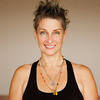
Jennilee Toner is student and teacher of yoga and human anatomy and the author of The Perfect Chaturanga. She has been practicing Hatha and Vinyasa yoga since 1996, teaching Hatha and Vinyasa yoga since 2003 and teaching experiential anatomy to yoga teachers in training internationally since 2010. She has also been teaching her own Hot Warrior Yoga 200-hour teacher training courses since 2012 and Inner Sanctum Yoga 300-hour teacher Trainings since 2016. Jennilee has been a college professor of Anatomy and Physiology in Upstate New York since 2021.