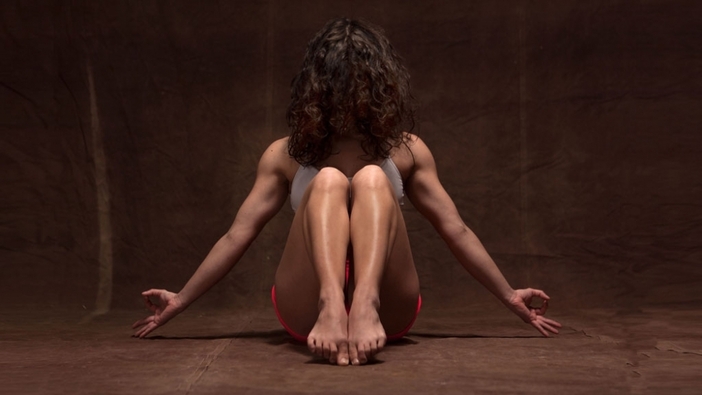
All of our yesterdays and the beauty of yoga
by Dawn Meredith-Davies
Having explored where our tension stems from and the effect it has on our body, we’re going to come full circle and tie up any loose ends. We’ve seen that tension in our tissues can result in inadvertent movement patterns, which can lead to overload, and if unchecked - or unchanged - injury and pain. The tension stems from the hold that disrupted meridians have, keeping the flow of energy out of kilter. The disruption arises from energy that is not in motion - or unexpressed e-motion. In this way, we can trace back an emotional element to all pain.
Emotional reactions
All of our daily interactions have an emotional element to them. Granted, we don’t hold an emotional attachment to all of them. Some of our interactions make us feel neither good nor bad. But it is the emotional response or reaction to our interactions that have an effect on us. It’s the old adage – one man’s pleasure is another man’s pain. Meaning, we all react differently to different situations, so it is not the situation, but our reaction to it.
It is this emotional response which has a lasting effect on our body. It informs where we hold tension in our body and consequently how we move. Those movement patterns inform how the muscle is held by its connective tissue and how the connective tissue pulls on its attaching bone. Load the bone and it literally redeposits its calcium matter towards the direction of that load. This happens slowly-slowly, but repeat the movement pattern, the loading pattern, the tension pattern for long enough and the shape of the bones changes accordingly.
And this is our posture. How do you think older people become stooped? It doesn’t happen overnight…it’s the response, over time, to reinforcing a pattern over and over…until it forms us! We have had emotional reactions to our experiences from day one. And our tissues adapt accordingly, slowly, over time. It is in this way that our movements are an expression of our underlying thought process (whether this is conscious or not…). It also informs why we have one-sided preferences as well…
Generic shapes and genetics
I love the shape of babies – they’re such generic forms! Boys and girls just being uninfluenced, full-of-potential bodies! It seems to take several years before a child will become so distinctly ‘them’-shaped(!) Of course, we recognise our children immediately - instinctively. But if you look at a child’s body, generally speaking, it’s still pretty generic!
And what about genetics you say? Well, we know that we can change our posture with sufficient, repeated input. This is what yoga tells us! Do not underestimate how much we emulate the people around us, especially during our childhood. We have to copy and mimic others, otherwise we wouldn’t learn how to walk or talk. But we also copy how we move, we copy how we react to incidents – we’re learning how to keep receiving the love that we desire and require, perhaps we are learning how to keep the peace. Perhaps we are learning through copying ‘how we can be like Mummy’, or ‘like Daddy’… The influence on what we see around us, as children, has a tremendous input on how we develop,* and this carries through into our posture. Our emotional world literally carves out our physical world.
*Ask Dr Bruce Lipton about the Biology of Belief!
The emotional side of pain and healing crises
So if our emotional life affects our physical life, what is happening when we have treatment and our pain goes away? On some level, there has been a shift – on the tissue level and on the mental-emotional level. This may not always seem apparent, but what about those times when you’ve had acupuncture, or a massage, or reflexology and it’s literally brought you to tears?
Those shifts are known as healing crises. An oxymoron of a term really, because how can a crisis be consummate with healing? The healing crisis is the shift – the expression of the emotion which has been stuck and what ultimately has been causing you to be out of kilter in the physical plane. The release of the emotion will allow the physical healing (the ‘mending’ as it were) of the tissues to happen, and allow the pain to dissipate. Sometimes we need a witness to our healing. Sometimes we need to see the physio or the acupuncturist or the massage therapist for assistance with the release.
Sometimes the therapy comes from talking it out…So often we need someone to help us to let go. Our physical yoga practice on the mat can help facilitate this release on a day to day basis. Ancient wisdom clearly knew this! As we practise and increase our flexibility and our mobility, we are literally releasing the tension held in the tissues around the joints…
But our practice off the mat (when we are literally living our yoga) is the time when we can extend our practice our beyond ourselves - to be the person that listens, to perhaps be the witness for someone else’s healing…
All of our yesterdays and the beauty of yoga
We are a function of all of our yesterdays - in our previous experiences, our previous beliefs and our previous reactions…and this literally creates our ‘physicalness’ – our body and our reality. This is not to say that yesterday has to inform our tomorrow. We always have a choice. With work and focus, we can make a choice, we can let go of the tension and change our experience of being in the world.
Every time we get on the mat, every time we interact with someone – every time we take a breath, in fact – we have a choice about what we do with the opportunity. We can choose to repeat what we did yesterday – move the same, think the same, behave the same, expect the same - or we can choose a different way. Therein lies the beauty of yoga - it allows us to be who we want to be today…on so many different levels.
More in Dawn's series:
Holistic physiotherapist, running movement specialist and yoga teacher, Dawn Meredith-Davies has spent over a decade utilising the powerful benefits of yoga to help others heal from their pain (or to improve their running!).