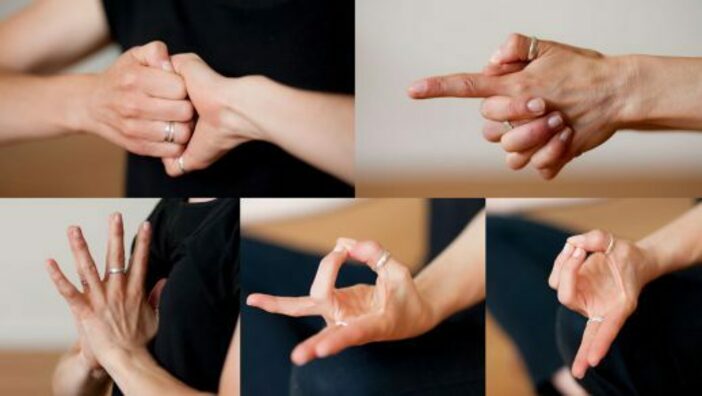
5 yoga mudras for strength
From harnessing strength, overcoming difficulty and increasing your sense of vitality, practising mudras can have a significant effect on the way our bodies and minds feel.... Here are some of the most effective yoga mudras for invoking strength and resilience.
Non-verbal communication
Our hands are central to the way we interact with the world around us; they’re one of the key ways in which we communicate with each person we meet on a daily basis. From the ancient origins of palmistry in India more than 5,000 years ago with Seers and fortune-tellers studying open palms, this mystical science spread to Tibet, Persia, China and Sumeria.
Palm reading is still traditionally used in these cultures today, but modern-day handshakes finalising business deals, peace signs, ‘thumbs up’, a comforting pat on the back, and the simple act of waving shows that we have always had a strong inclination to use the hands in a meaningful way.
Handshakes, peace signs, ‘thumbs up’, a comforting pat on the back and a cheery wave all show how we use the hands in meaningful ways.
The power of mudras
Mudras are ‘gestures’ or ‘symbols’ intended to direct awareness and subtle energy, and create changes on a physical and esoteric level. Primarily based in Ayurveda – often known as the ‘sister science’ of yoga – these mudras are intended to balance and harmonise, to unblock and unleash important and powerful effects.
The intention behind the mudra matters as much as the physical hand positioning itself – so be clear about how and why you’re aiming to change your energy and set your intention before practicing. Just as we take time to practice physical yoga asana and to still ourselves in meditation, mudras are worth taking the time to work with and can help us realise what the body and mind needs and how we have the power to change how we feel when we want to…. Here are five:
1. Ganesh mudra - removing obstacles
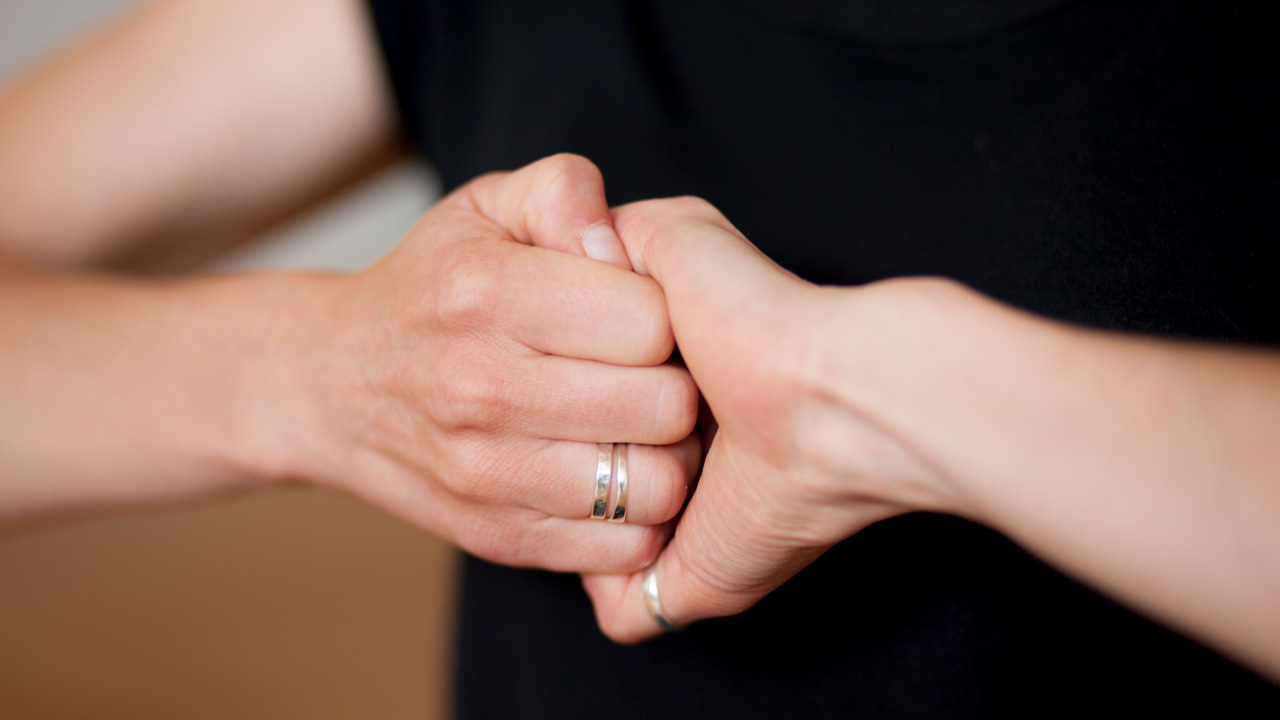
Ganesh is the celebrated elephant-headed deity, said to be the remover of obstacles and patron of letter-writing and learning. It’s common to invoke Ganesh before an important journey or event or to give him some thought when we’re looking to overcome life’s many obstacles.
Ganesh is also known to place obstacles in front of us in order to help us learn and grow too. You might notice this with the hand positioning of this mudra – the hands are interlocked in front of the chest, representing both the obstacles we meet but also the strength we hold within to overcome them.
How to do Ganesh mudra: hold your left hand in front of your chest, palm facing out. Grasp the left fingers with the right to form a 'lock', with the back of the right hand facing out.
2. Kali mudra - overcoming difficulty
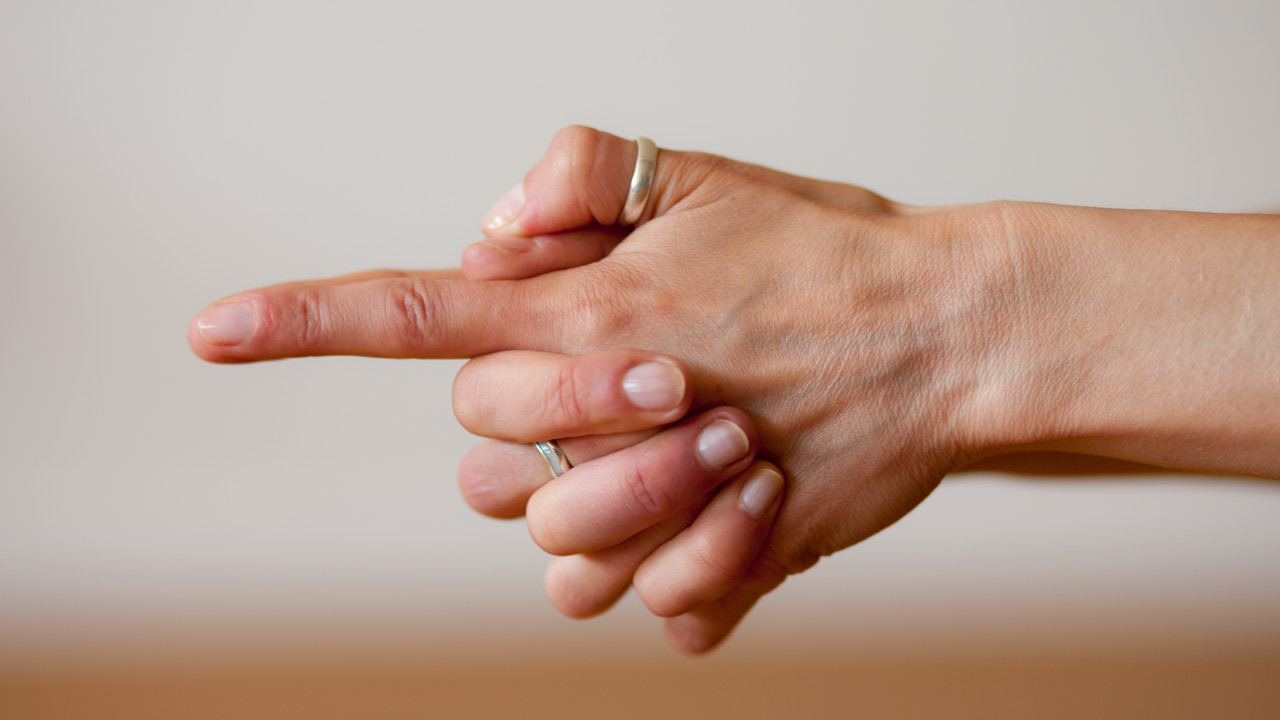
Another mudra representing overcoming difficulty; Kali is the fierce goddess representing death, destruction, transformation and ultimately purification. She’s all about destroying dark and evil in order to let in the light of good triumph. If you’re looking to make changes, destroy some unnecessary baggage, or to find a little more ‘fierce goddess’ energy to get you through a tough day, Kali is the deity to invoke with this mudra.
As you might notice, the hand positioning is very direct – the fingers are tightly linked and the index fingers point directly and purposefully; the left thumb is crossed over the right thumb to represent a feminine quality with the left-hand side of the body thought to be dominated more by female energy.
How to do Kali mudra: interlock your fingers placing your left thumb over the right thumb. Index fingers press together and point away.
3. Anjali mudra - offering respect
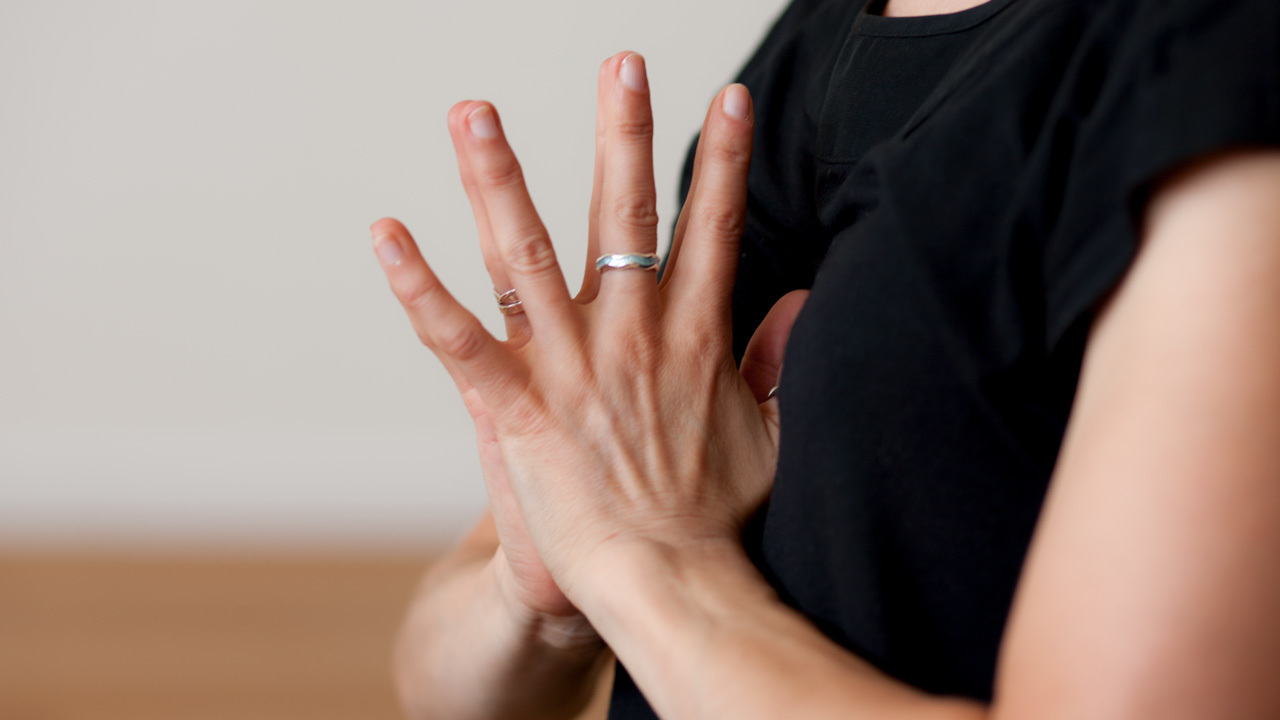
Perhaps one of the most recognisable mudras used in yoga; Anjali mudra is also known as the gesture for ‘Namaste’ or ‘Pranam’. These can be understood as ‘offering’, ‘greeting’ or ‘saluting’; you may have practiced this in a yoga asana class as a way of preparing for the practice ahead, or used the gesture to greet someone. Either way, it’s a way of offering respect to yourself and others and can be universally understood as a symbol of peace.
How to do Anjali mudra: press the palms lightly together with the thumbs lightly touching the breastbone and the fingers together or spread wide.
4. Prithvi mudra - feeling supported
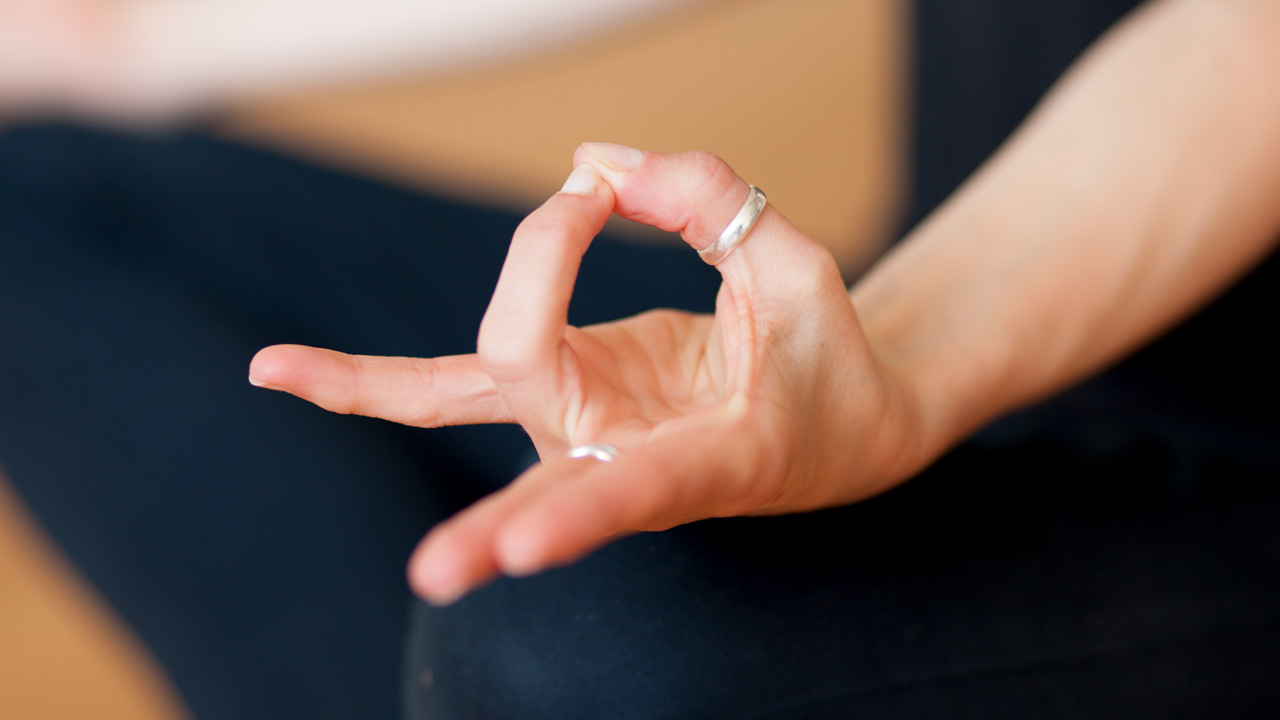
Different fingers are said to represent different elements, and when bringing a certain finger into contact with the thumb, that particular element can be brought into balance. If you’re feeling a little ‘ungrounded’, overwhelmed or fatigued then Prithvi mudra balances the ‘earth’ energy and can help you feel strong, and settled again. Remember - the intention behind each mudra is as important as the physical gesture itself, so when practicing this, breathe calmly and deeply, and focus on the sense of feeling supported.
How to do Prithvi mudra: touch the tip of the ring finger of each hand to the tip of the thumb. The rest of the fingers should be pointing away.
5. Prana mudra - enhancing vitality
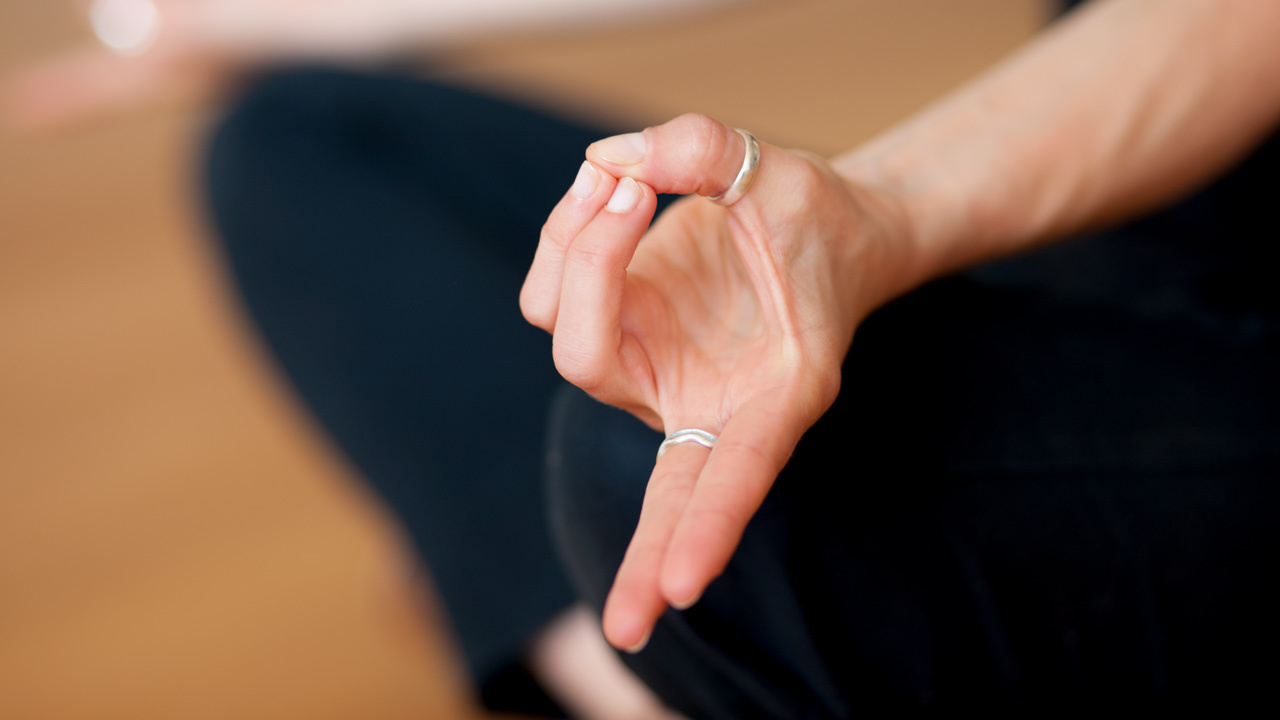
Referred to as ‘life force’ and sometimes ‘breath’ – prana can be understood as the breath of life, the energy behind everything that exists in the universe. Something that is full of vitality, life and health may be said to be full of ‘prana’ and developing a way to build and contain prana is an important part of a yoga practice. When you're feeling low in energy or your meditation practice is focused upon building vitality and energy, this is the mudra to use in order to enhance a sense of ‘aliveness’.
How to do Prana mudra: Touch the tips of the ring and little fingers to each thumb and let the index and middle finger extend away.
Want to learn more Mudras?
EkhartYoga teacher Francesca introduces you to the most practiced Mudras in Hatha yoga: Jnana, Chin and Atmanjali Mudra in this short video "An introduction to the Mudras".

Emma is a 500hr registered yoga teacher, writer and holistic therapist based in Sussex, UK. With a passion for yoga philosophy and Ayurveda, she loves bringing these ancient methods to the modern world in an accessible and easy-to-implement way through her writing and courses. Emma leads the Yoga, Ayurveda & Holistic Health course in person the UK and also online Modern Ayurveda & Holistic Health courses, giving students tools and techniques to enhance their health and wellbeing. You can find out more via her website or follow her on Instagram.